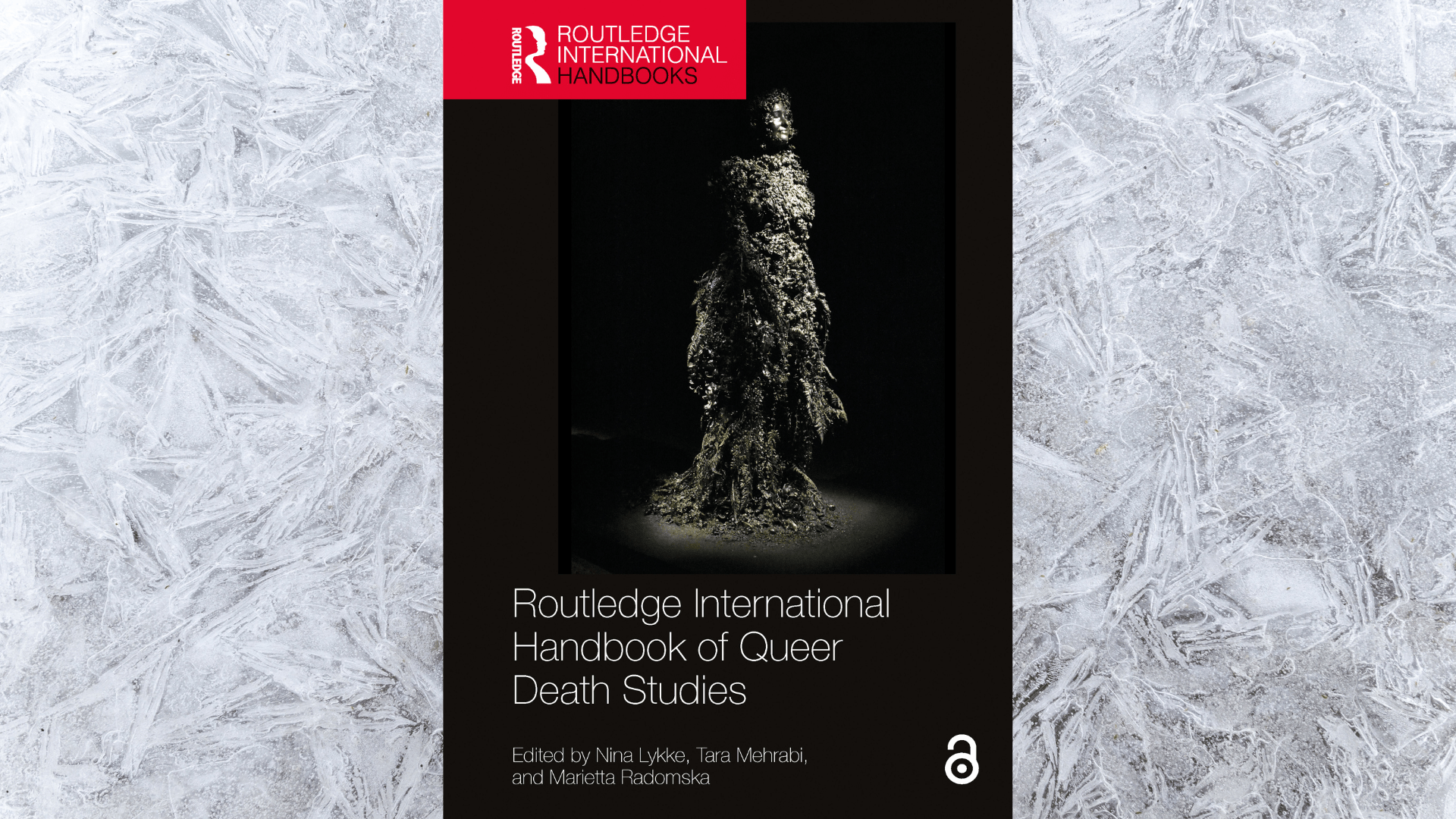
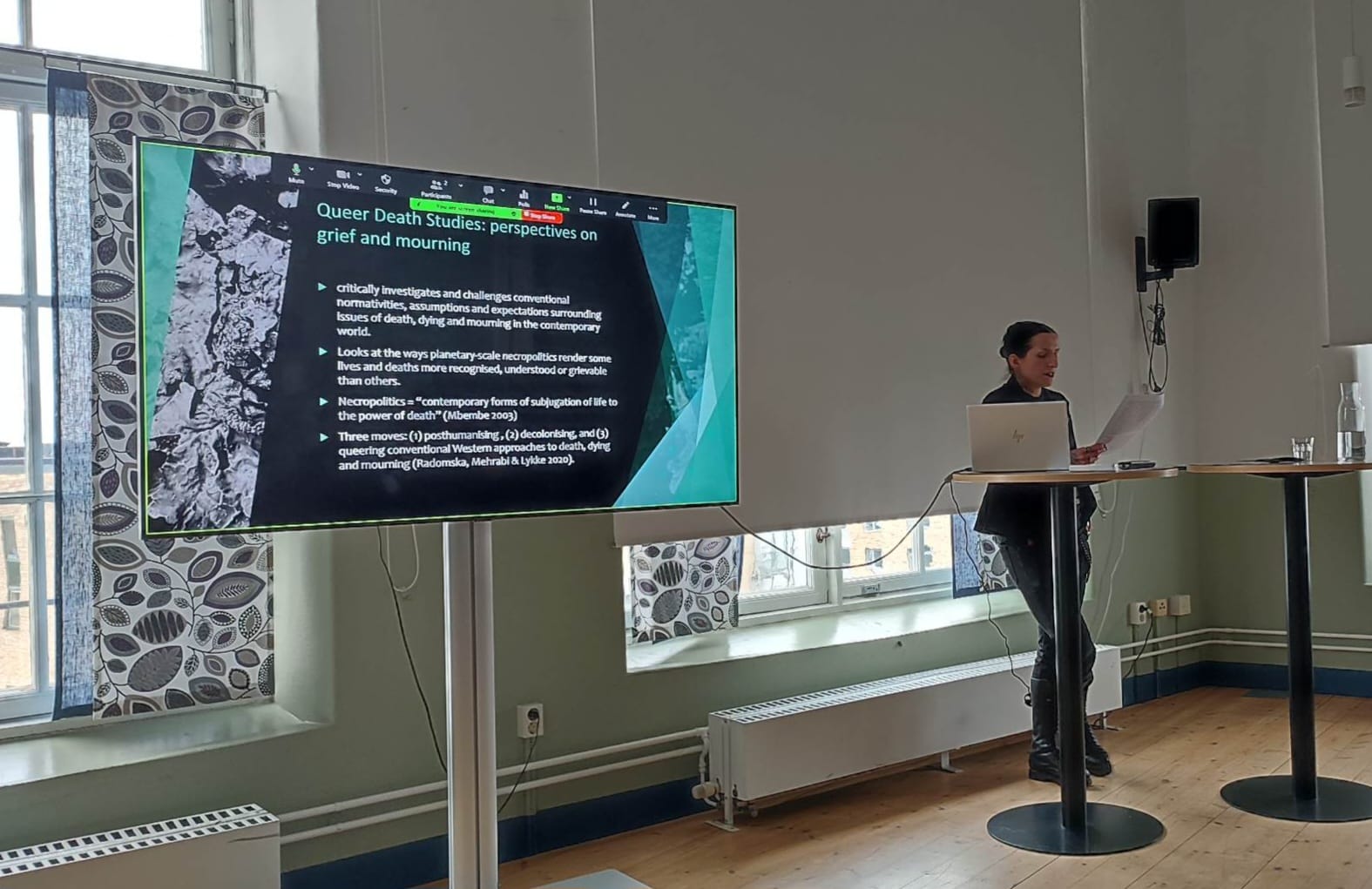
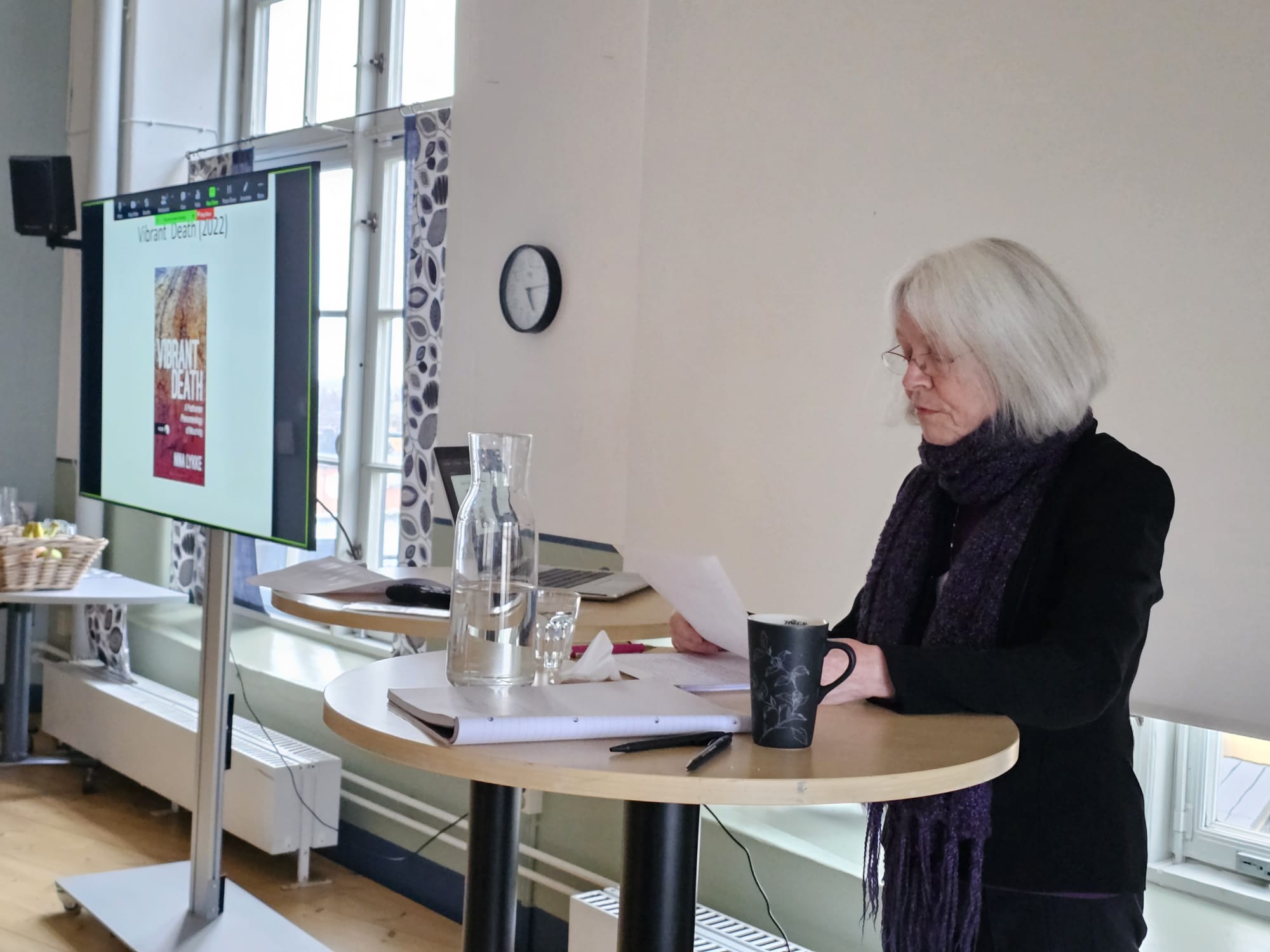
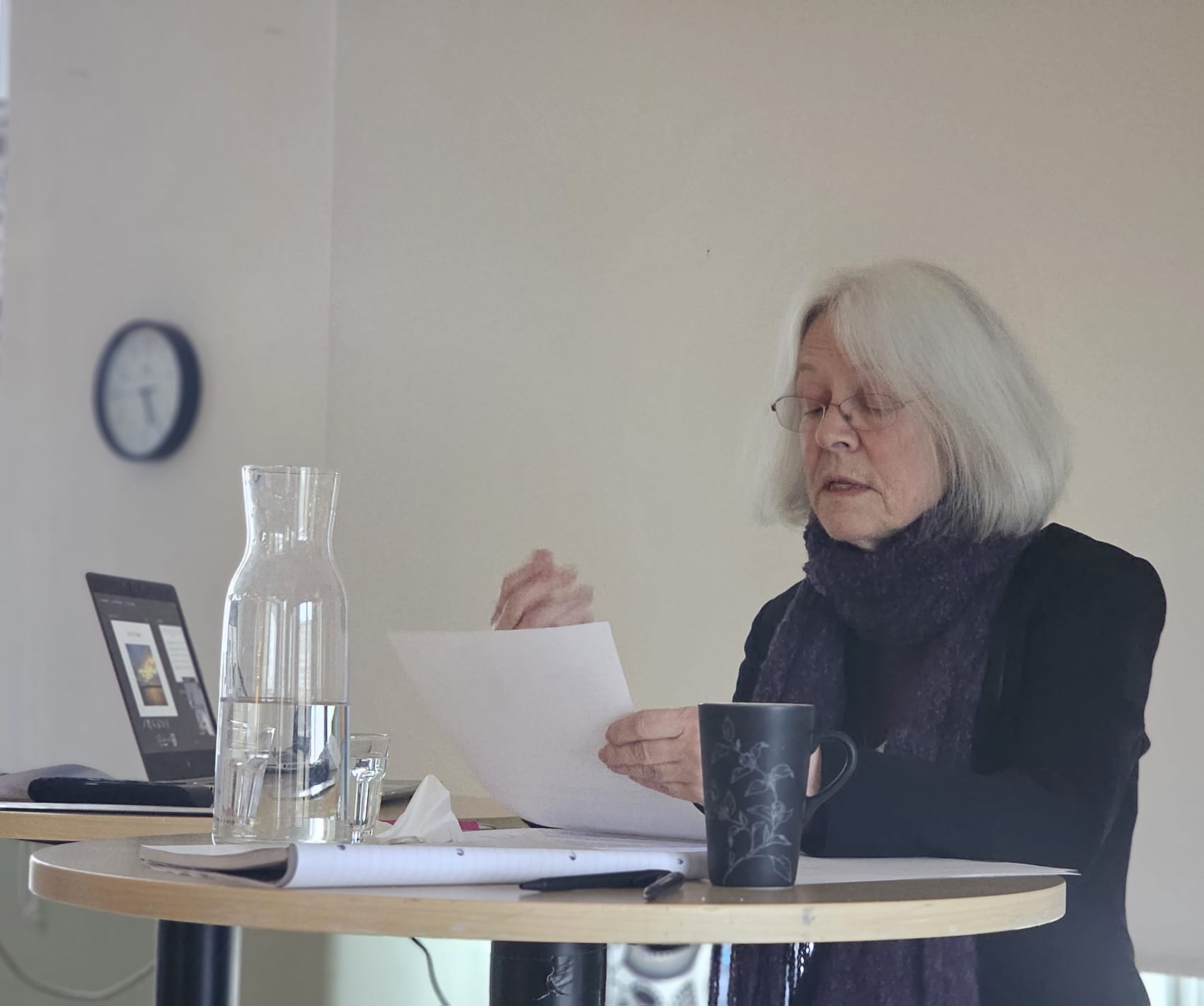
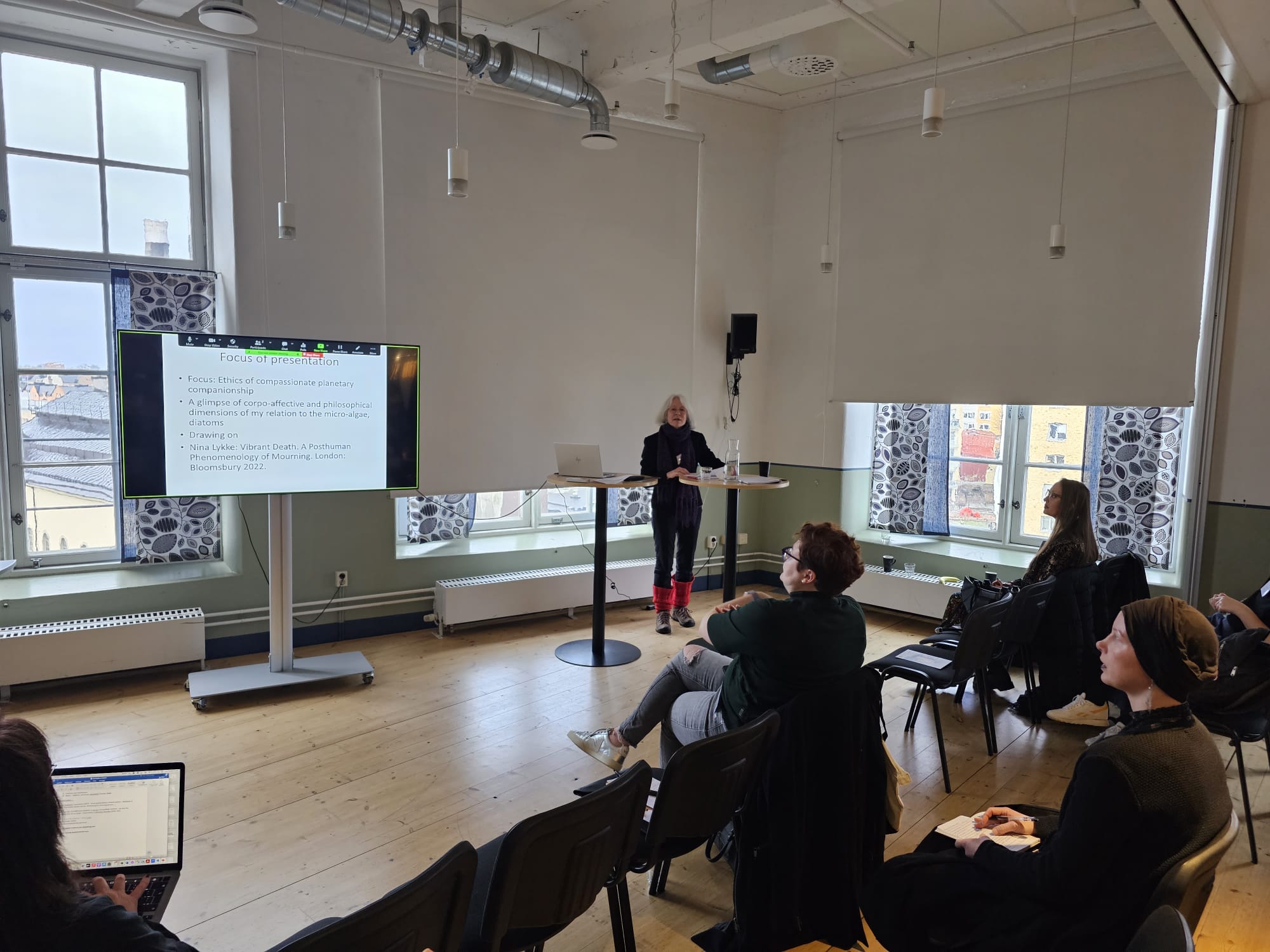
Routledge International Handbook of Queer Death Studies is OUT!

At the end of October 2025 – which means already five months ago – the long awaited major publication came out!

The 758-page volume: Routledge International Hanbook of Queer Death Studies, edited by Nina Lykke, Tara Mehrabi, and Marietta Radomska encompasses 63 chapters, written by 75 authors. The book consists of seven thematic sections: I. Rethinking  Life/Death Ecologies and Temporalities; II. Anthropocene Necropolitics and Extinction; III. Caring Death Activism; IV. Aesthetics and Mediated Imaginaries of Death; V. Politics and Ethics of Grieving Practices and Remembrance; VI. Co-Becoming with the Dead and Spectral Mourning; and VII. Imagining Life/Death Entanglements Differently.
Broadly speaking, the Handbook aims to provide a comprehensive, international cartography of Queer Death Studies, offering broad, in-depth insights into the field and its emergence through tentacular transdisciplinary networking. Taking research and art-making on death, dying, mourning, and afterlife into new directions, it explores the multiple effects of contemporary necropolitics and the proliferation of death-worlds during the current period of Earth’s history, ‘The Anthropocene’ or ‘the Age of Man’.

Informed by queer, critical posthumanist, decolonial, and feminist approaches, the Handbook presents a unique variety of both critical and affirmative reflections upon the world’s intersecting necropowers, and ethico-political potentials for social and environmental change. Contributors speculate on ways to reimagine life/ death-relations as vibrant entanglements. They also investigate modes of mourning differently, resisting necropolitical regimes that deem human and non-human individuals and populations to be disposable and non-grievable when they differ too much from the normative modern subject, Universal Man, in terms of intersections of gender, racialisation, class, sexuality, embodiment, embrainment, geopolitical positioning, or species.

A thought provoking read, this Handbook is intended for broad global audiences of researchers, artists, teachers, students, death-professionals, (health)careworkers, activists, and NGOs interested in tools to rethink and reimagine death, dying, mourning, and afterlife from intersections of queering, decolonising, posthumanising, and feminist perspectives.

The volume includes two chapters that are available in OPEN ACCESS.

The cover of the Routledge International Handbook of Queer Death Studies

News from Utrecht University: NOISE Summer School on Queer Death Studies

Today we have some exciting updates for you directly from our colleagues at Utrecht University, namely, an invitation to sign up for a PhD and MA student-focused NOISE Summer School on “Queer Death Studies: Loss and Grief in Contemporary Bio- and Necropolitics which takes place on 26-30 August 2024 in Utrecht, NL.

The 2024 edition of the summer school is coordinated by Dr Ida Hansen (Utrecht University) and Prof. Em. Nina Lykke (Linköping University).

Here is a brief description taken from the organisers’ website:

“Embedded in the emerging field of Queer Death Studies, this year’s NOISE summer school focuses on the topics of loss and grief by bringing perspectives from the fields of queer feminist, posthuman and eco-critical, anti-racist and post- and decolonial studies to bear on contemporary questions, practices and politics of life and death.

The interdisciplinary field of Queer Death Studies has, in recent years, taken shape as critical interventions in and reconfigurations of the ontologies, epistemologies and ethics that limit the conventional study of death and dying to the anthropocentric, racist, sexed/gendered and otherwise normatively figured human subject and its similarly imagined relations, with little attention paid to the impacts of contemporary bio- and necropolitics (Radomska, Mehrabi and Lykke 2020). Simultaneously, the topic of grief has received heightened attention with its recent realization as psychiatric diagnosis (i.e., the entries of “Prolonged Grief Disorder” in the DSM-5-TR and the ICD-11). Across expert discourse and popular-societal debate, however, resides a tendency to constrain engagement with experiences of loss to the question of whether to perceive of grief as pathology, rather than asking what else this phenomenon might have to tell us about life and death. […]”

READ MORE ABOUT THE SUMMER SCHOOL AND LEARN HOW TO REGISTER.

New special issue of Research in Arts & Education focused on Death is OUT now!

We have a pleasure to share with you the latest update from the editors of the OPEN ACCESS journal Research in Arts & Education, namely, that the special issue focused on topic of death and guest-edited by Helena Sederholm has now been published! Below we include a brief summary from the editors of the journal and the table of contents.

Check it out!

Research in Arts and Education Thematic issue on Death is now published. 

Guest Editor: Helena Sederholm

In this thematic issue, we have a compilation of articles, visual essays, and a commentary dealing with death from diverse viewpoints. In many texts, posthuman and more-than-human-aspect, that is, the relation to other species, has been emphasized. Nevertheless, it is impossible to avoid the perspective of humans, especially when dealing with art, philosophy, and education.

TABLE OF CONTENTS

Thematic issue: 

1–6
Editorial 
We are all necronauts
Helena Sederholm

7–20
Ecologies of Death, Ecologies of Mourning: A Biophilosophy of Non/Living Arts
Marietta Radomska

21–31
Reimagining Death in an All-Too-Human World: A Pedagogical Exploration of Pinar Yoldas’ Ecosystem of Excess
Juliette Clara Bertoldo

32–44
The Spores of Life and Death
Tiina Pusa

45–52
The Bouquet of Death and Decay
Eeva-Liisa Puhakka
                        

53–61
Corpses in Training: Blanchot and The International Necronautical Society’s Experimental Expeditions Beyond Life
Sami Sjöberg

62–75
To the Other Side with Bees
Ulla Taipale

76–84
Unravelling Haptic Visuality and Notions of Care Through Two Videos About Death
Anna Walker and Jo Milne

General Articles          

85–98
Arctic Wool
Fabiola Hernández Cervantes

99–110
Children of Drama: An Arts-Based Educational Action Research Project Applied to a Group of In-Service Educators
Theodora Salti

Visual Report: Ecologies of Death, Ecologies of Mourning. Vol. I

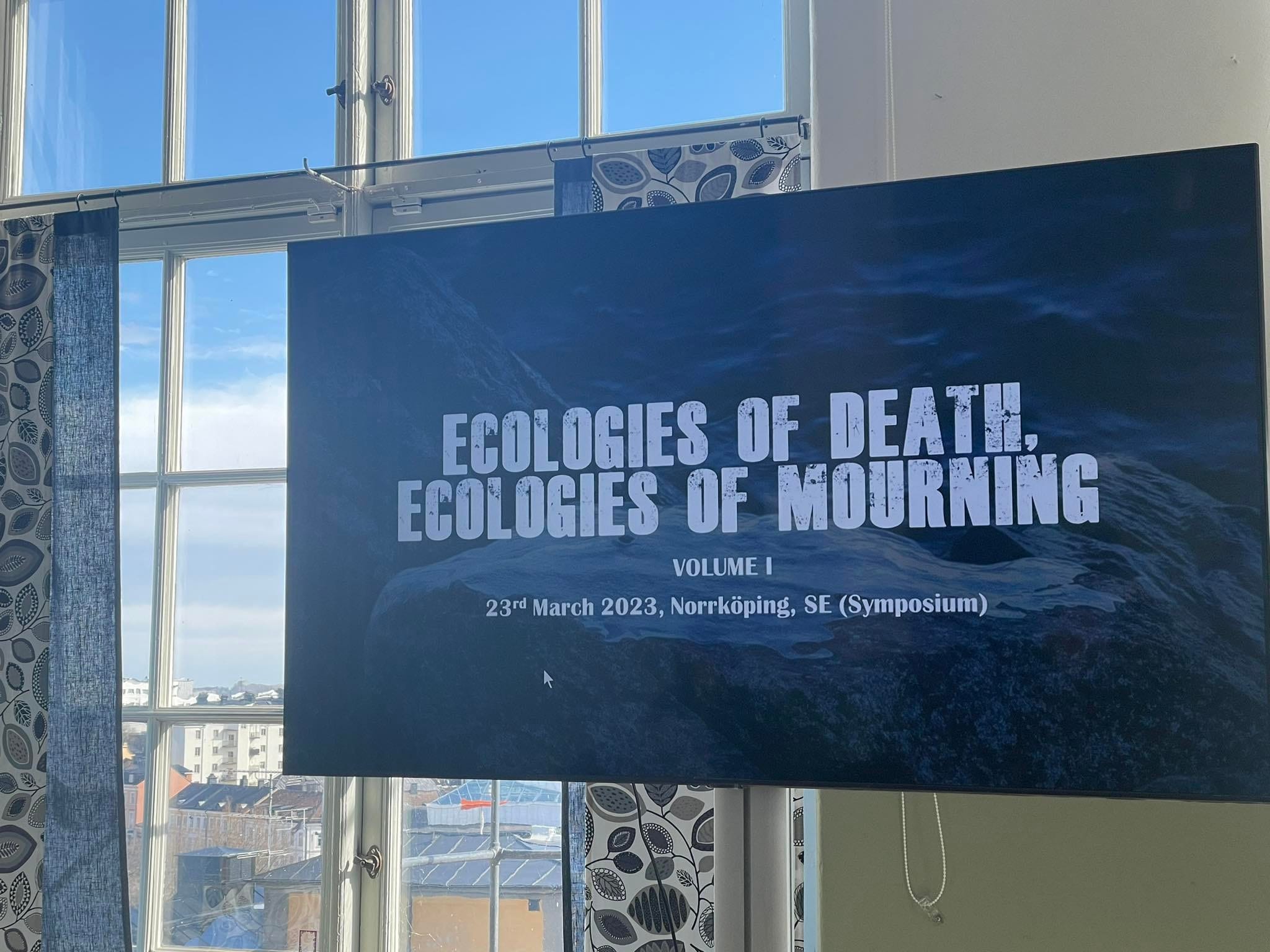
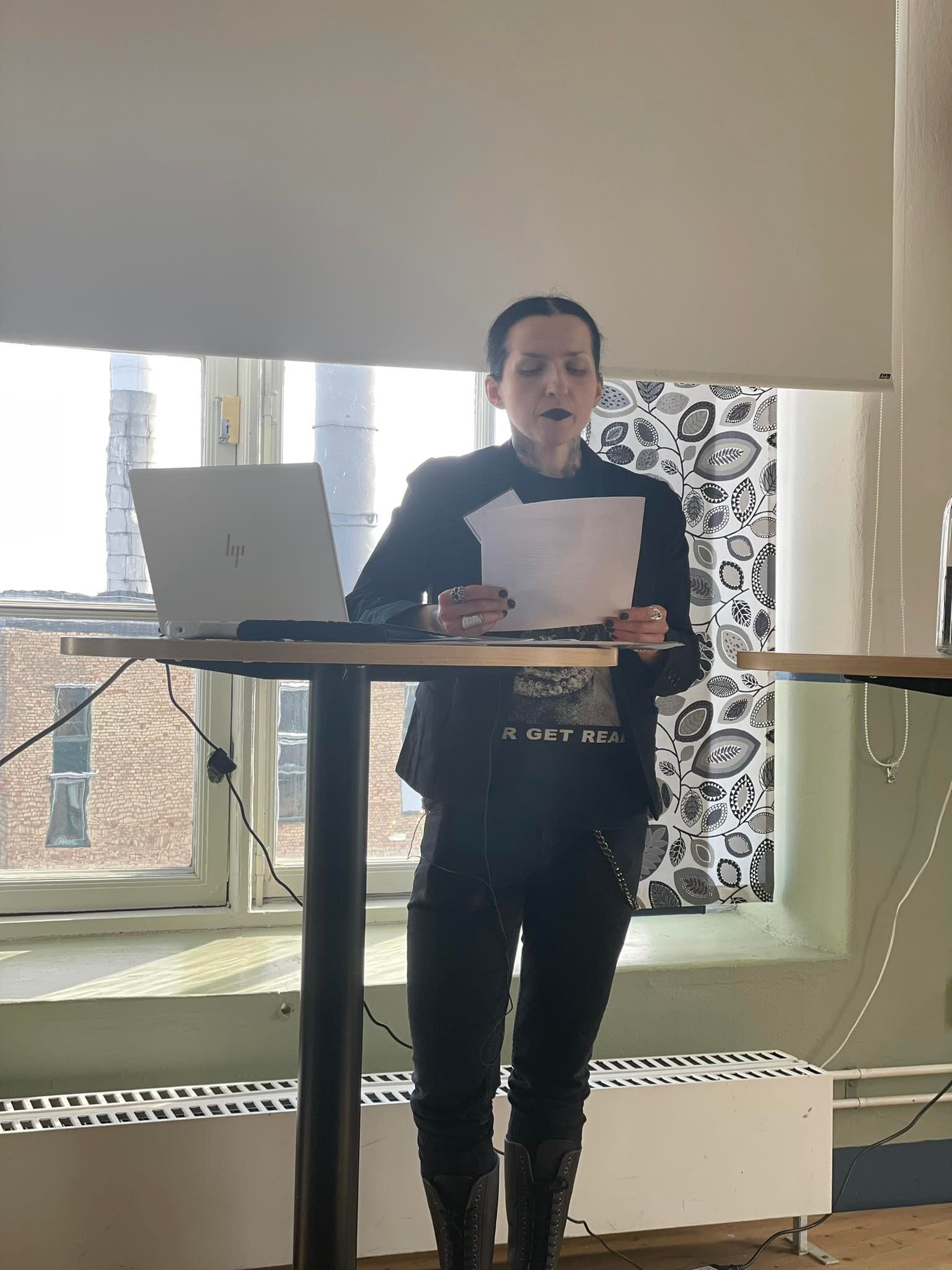
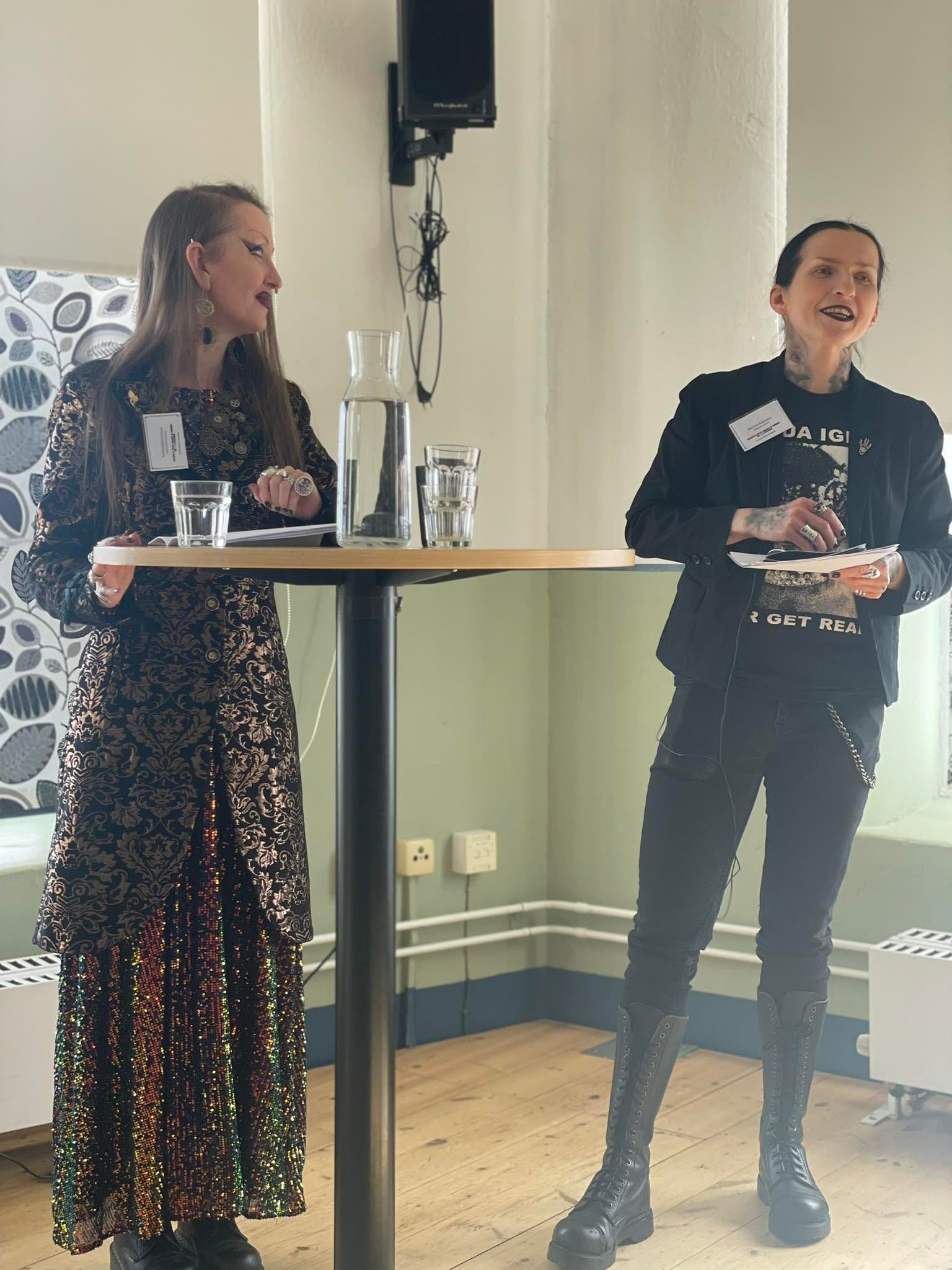
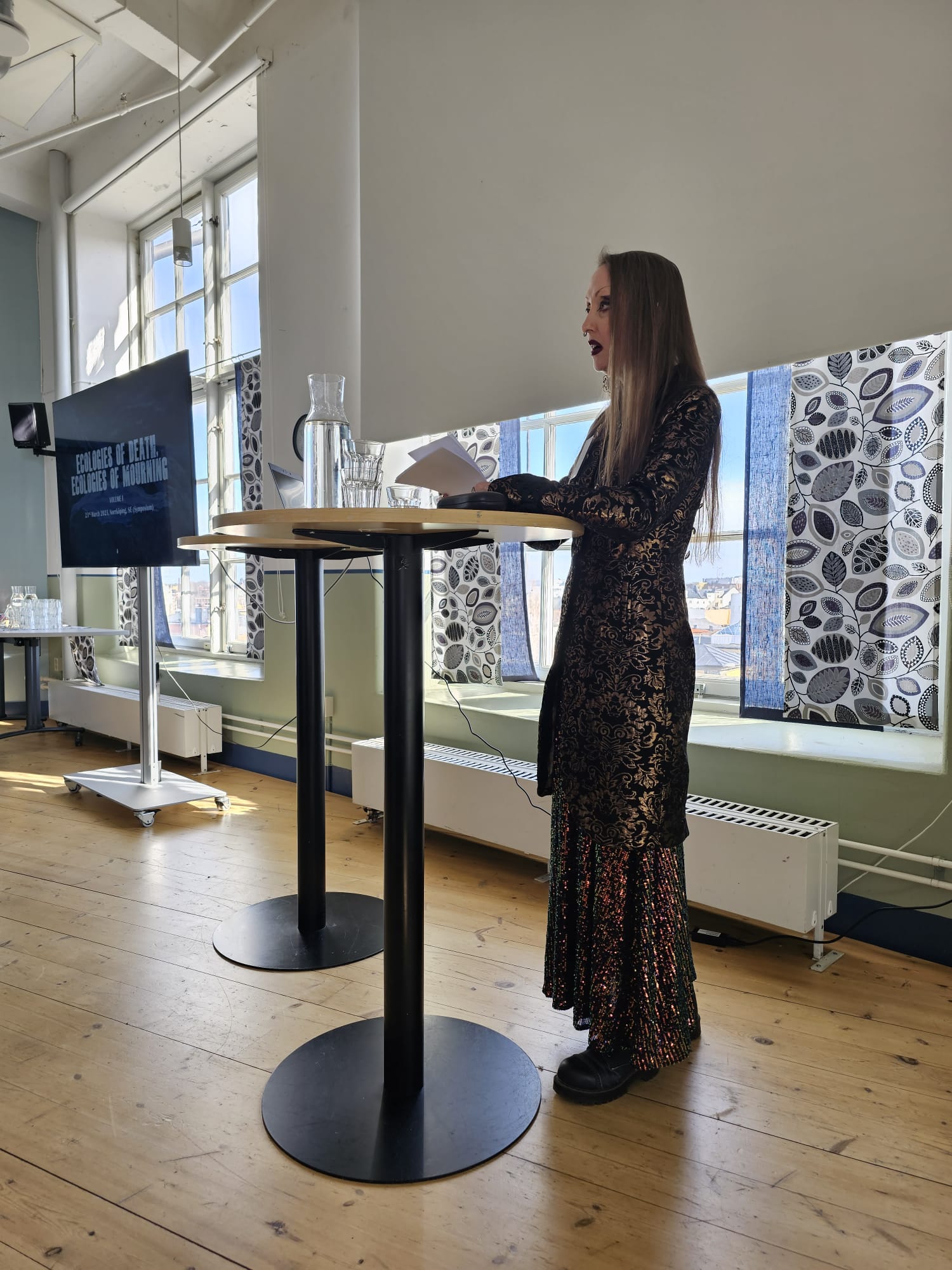
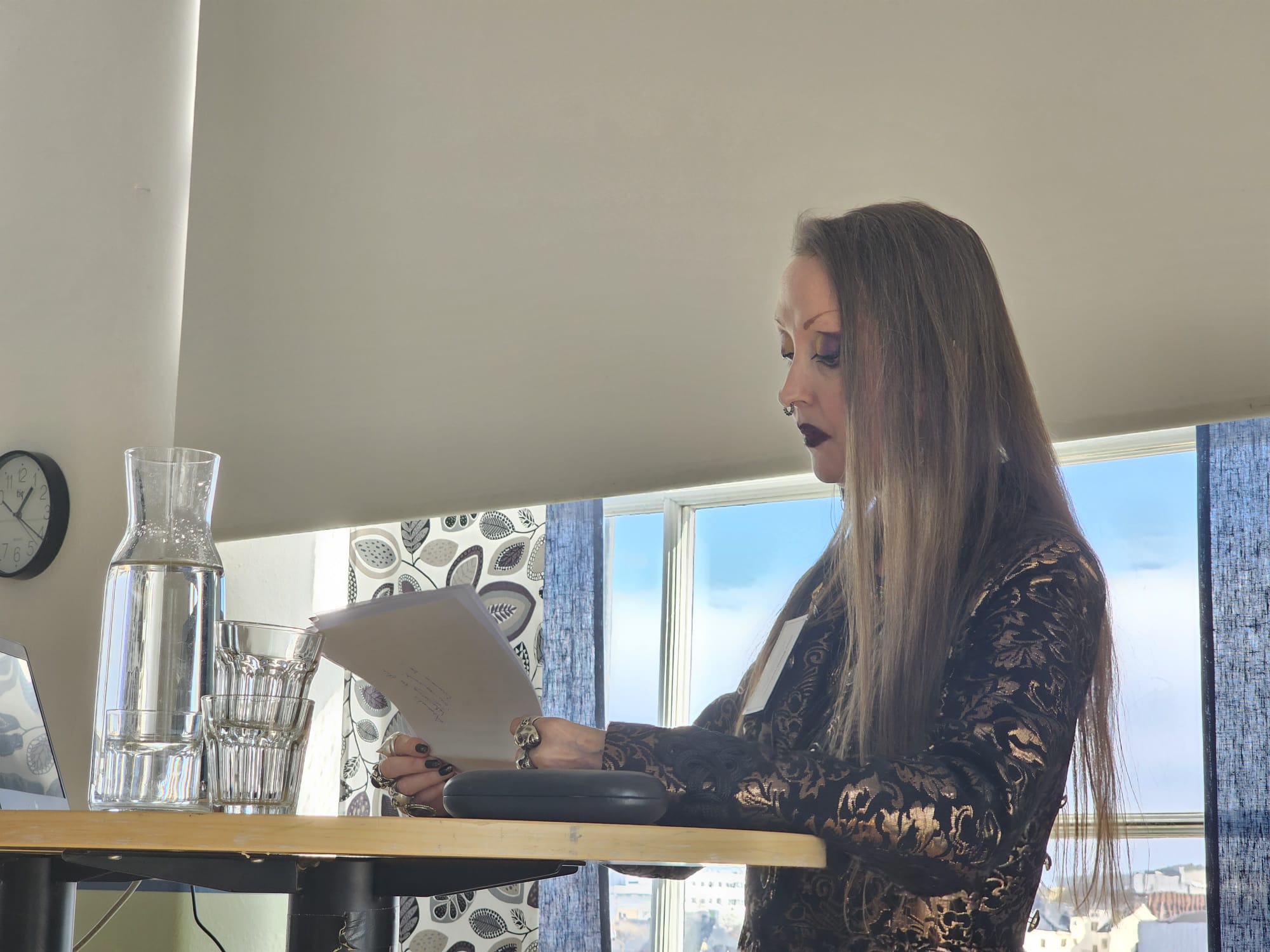
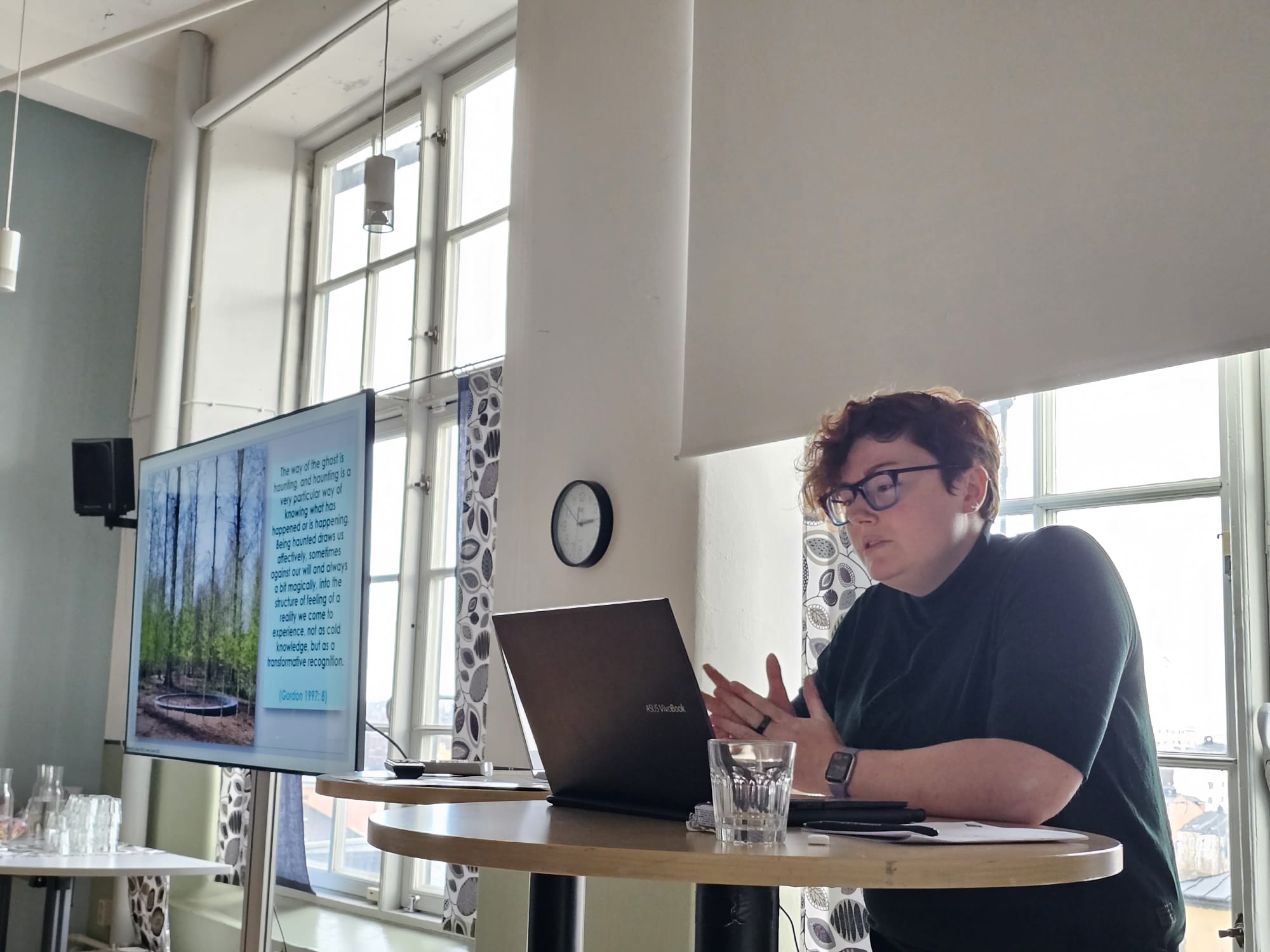
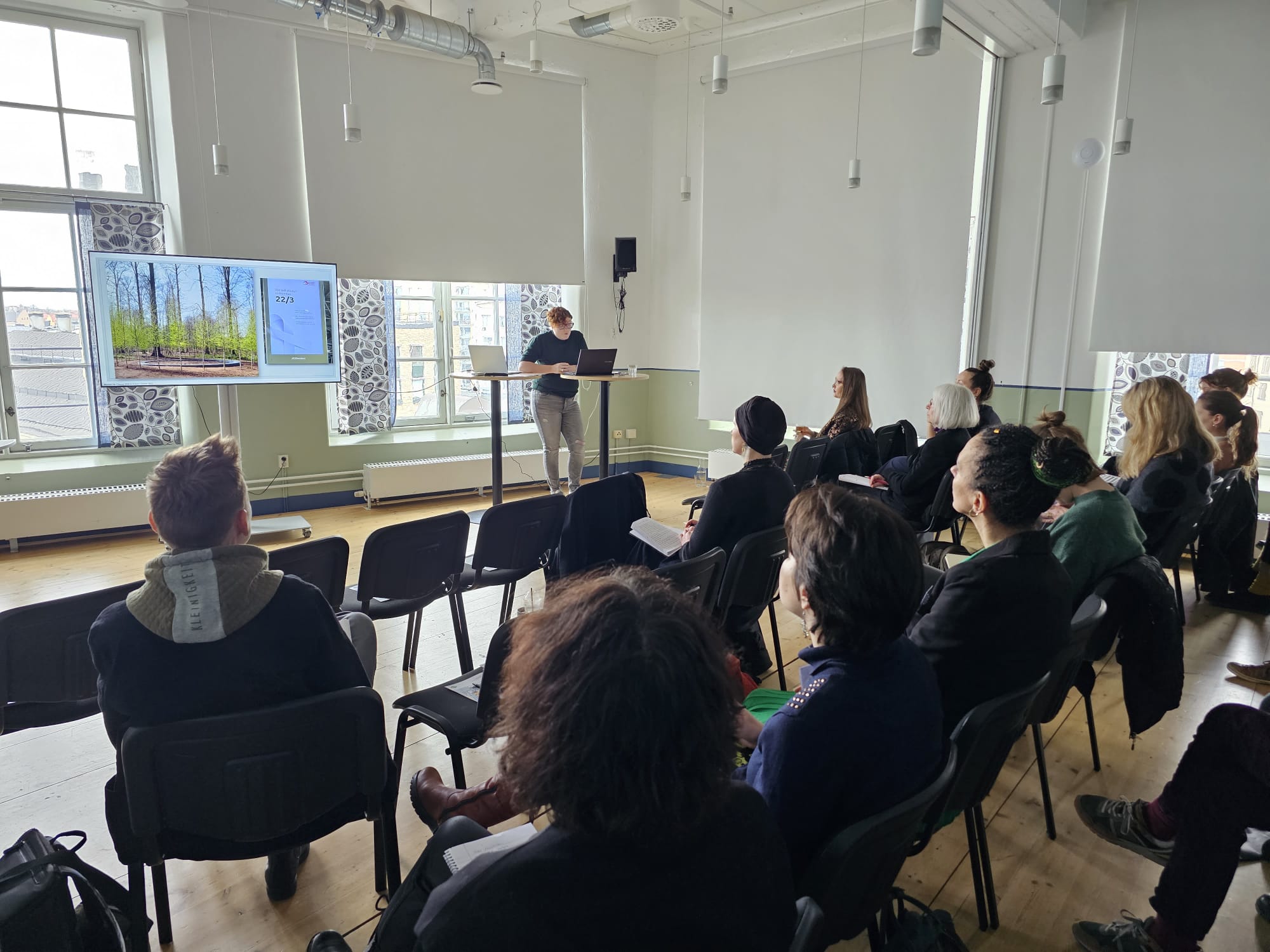
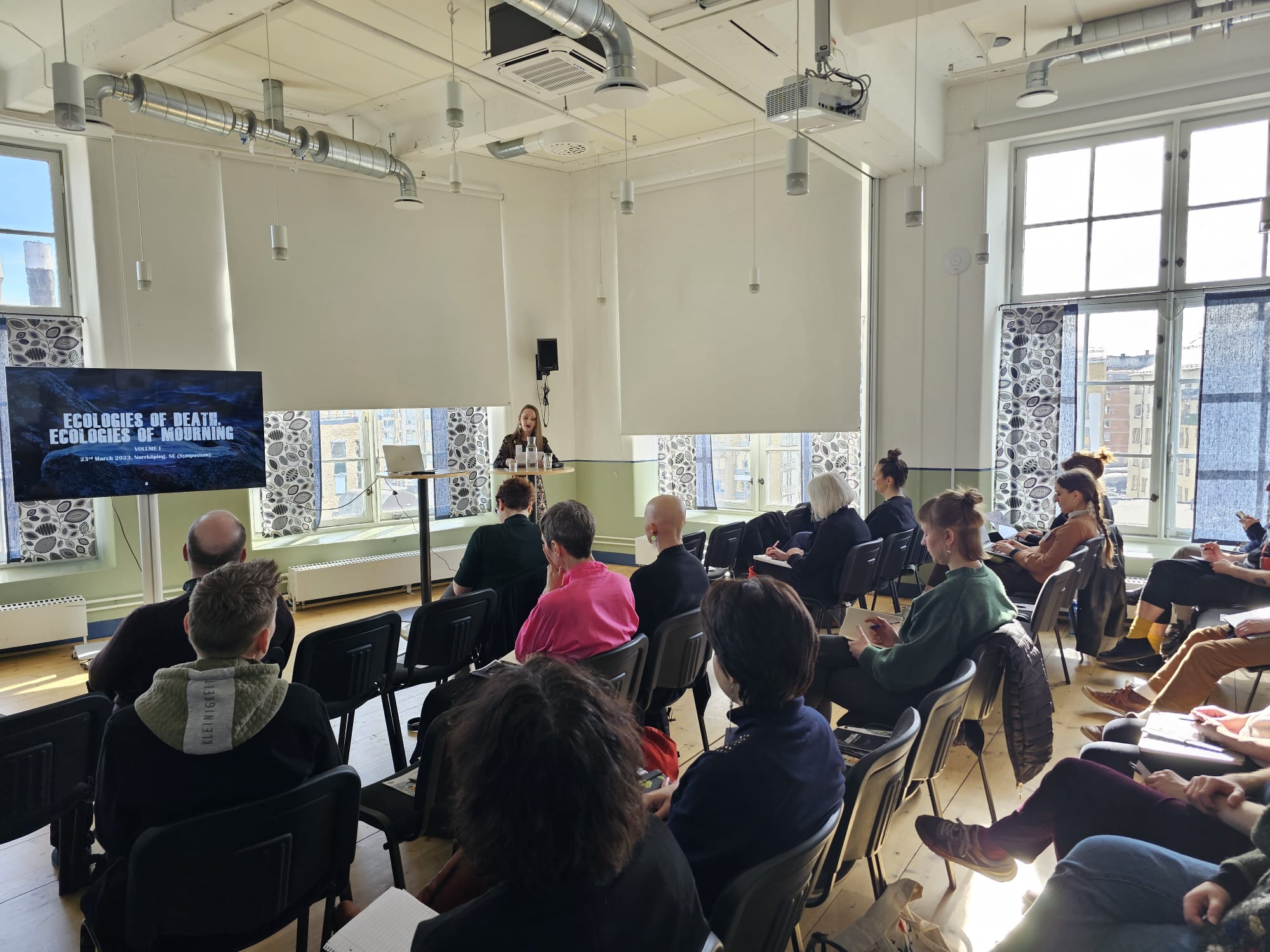
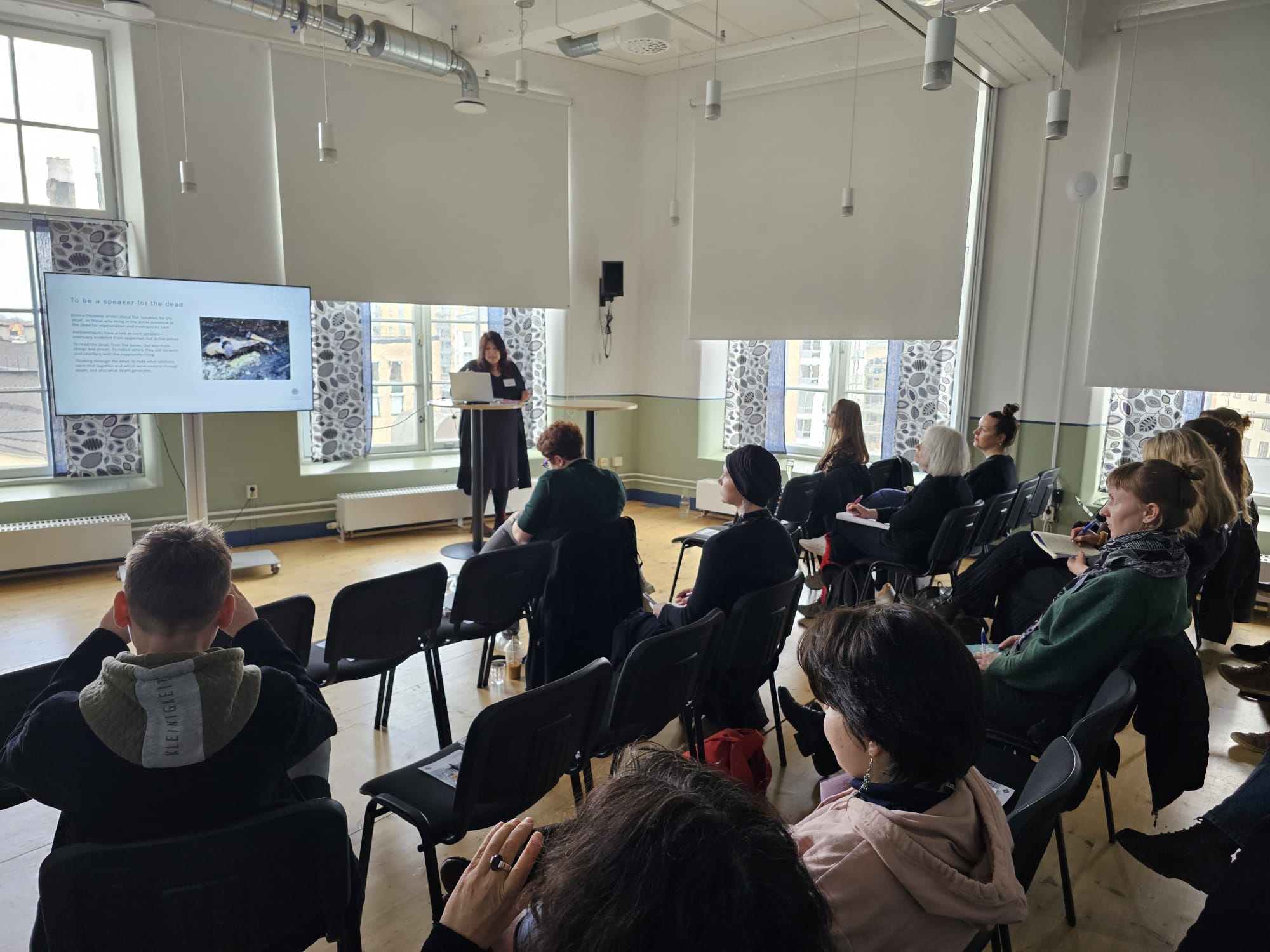
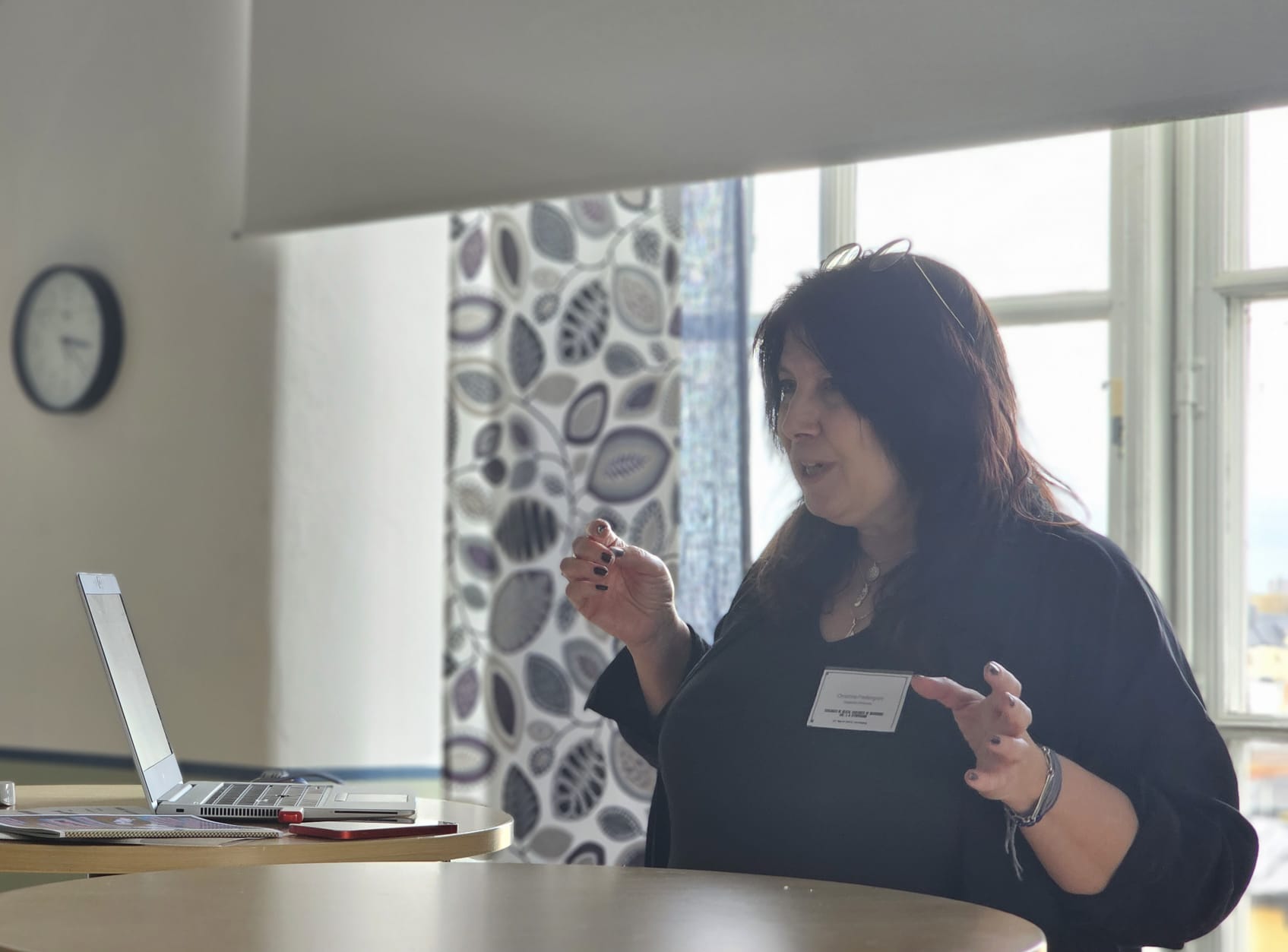
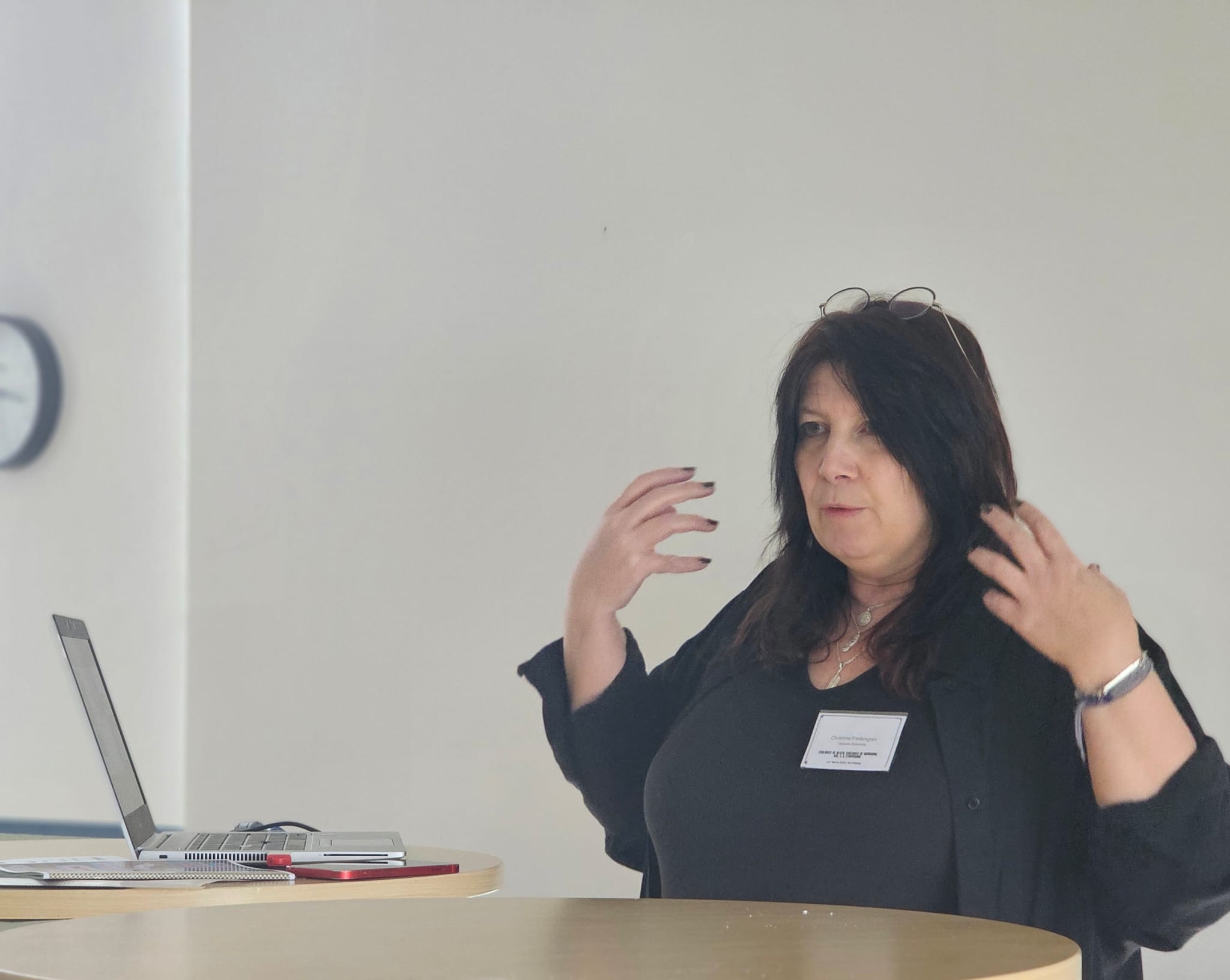
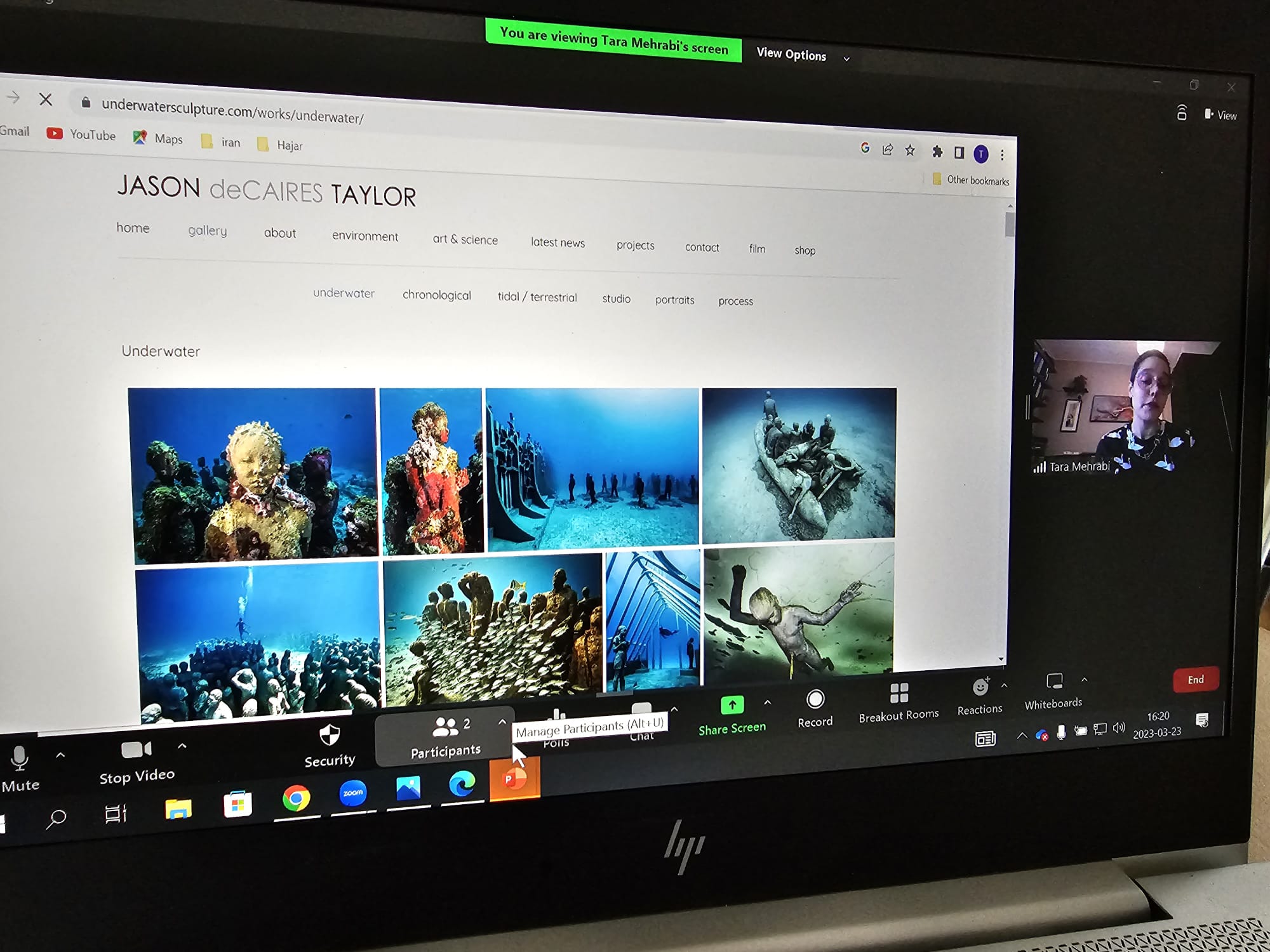
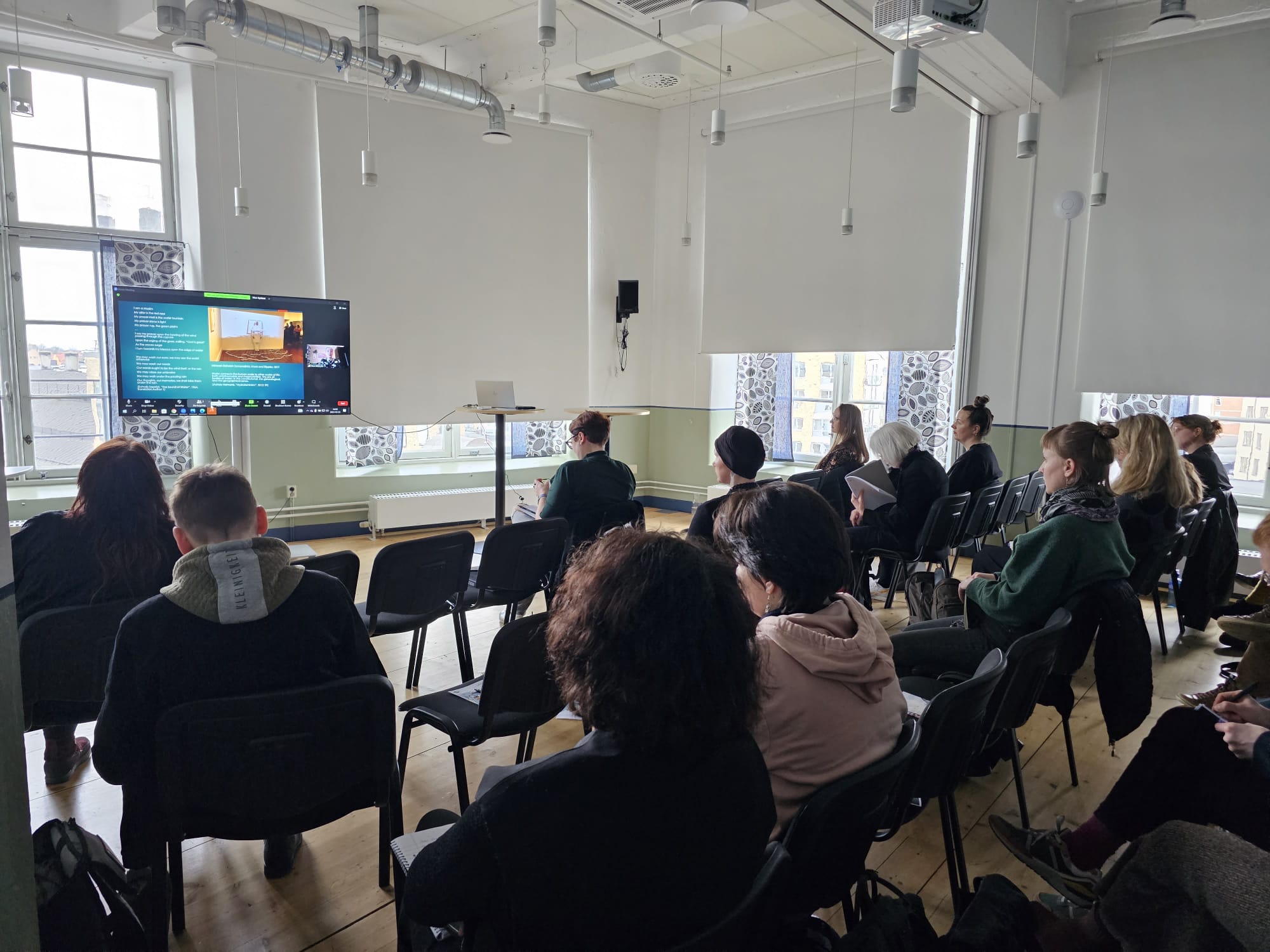
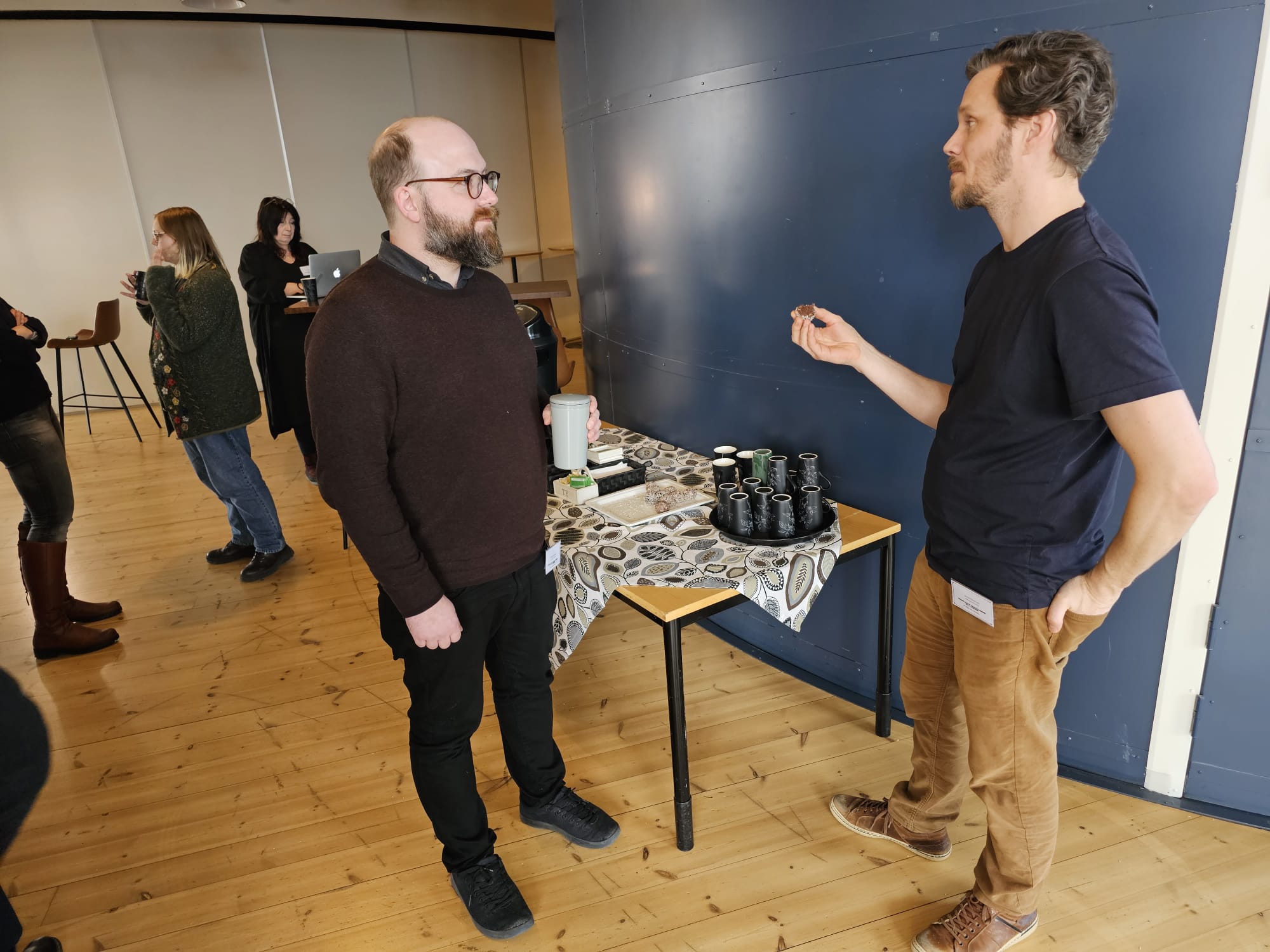
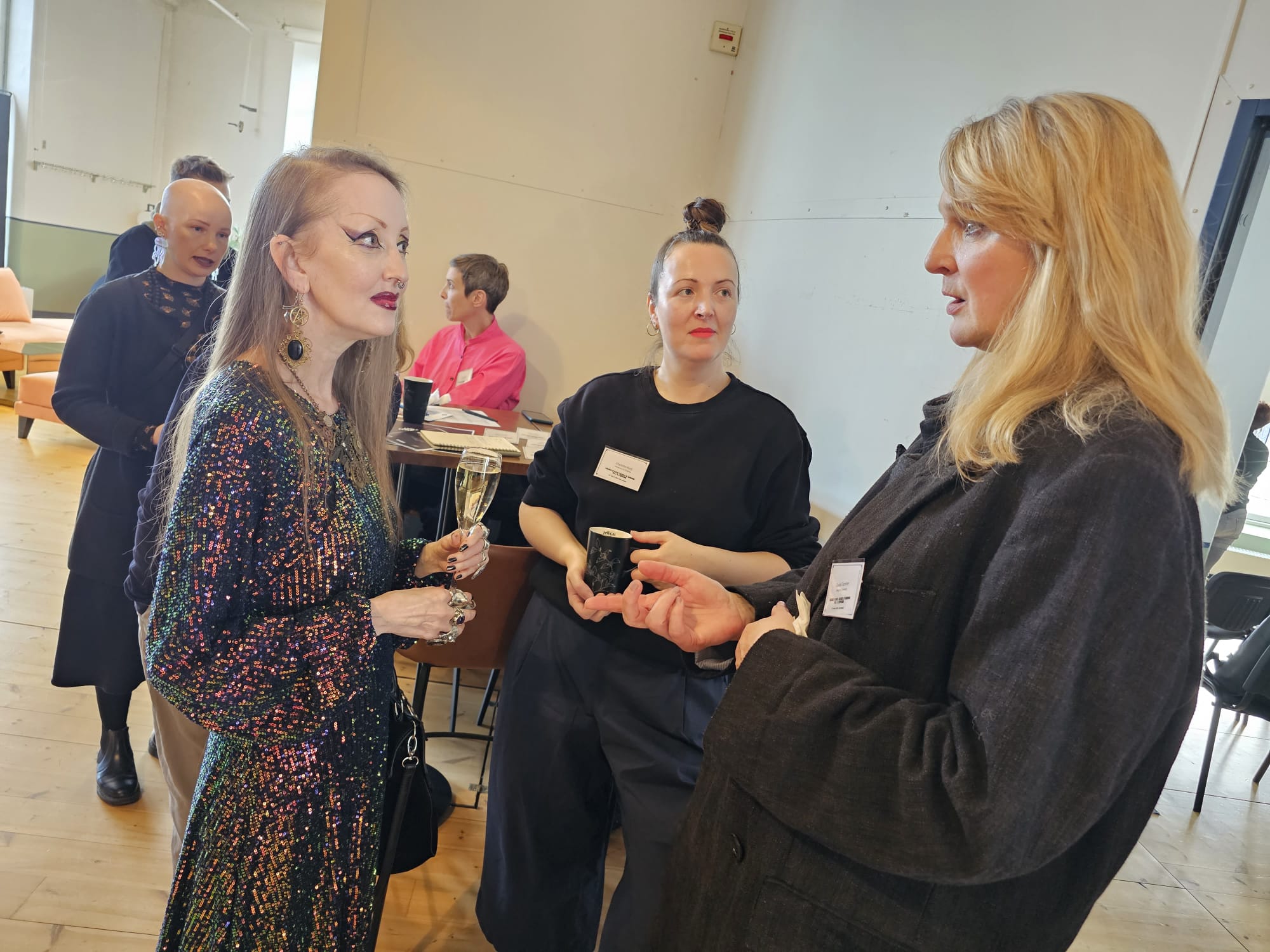
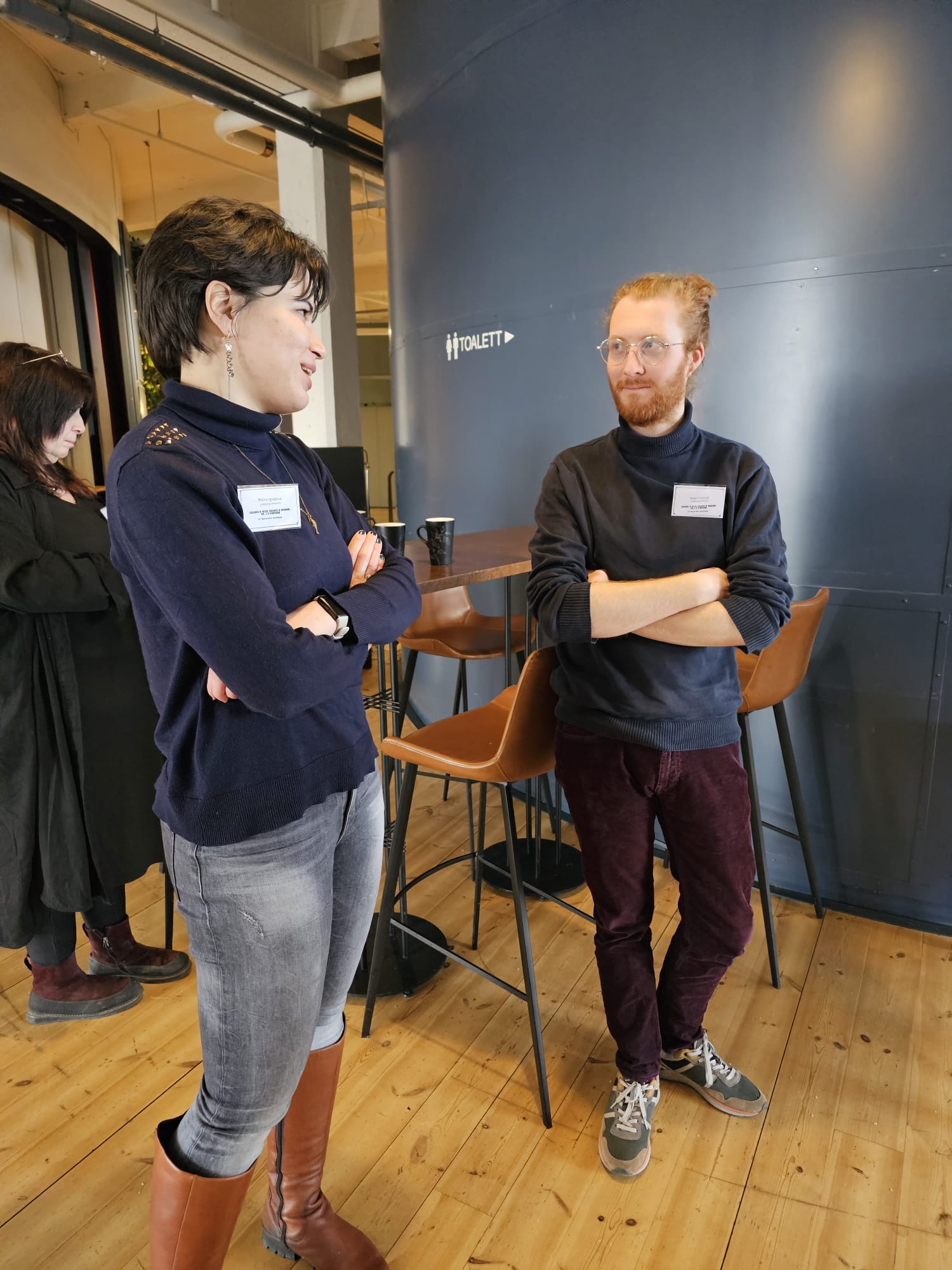
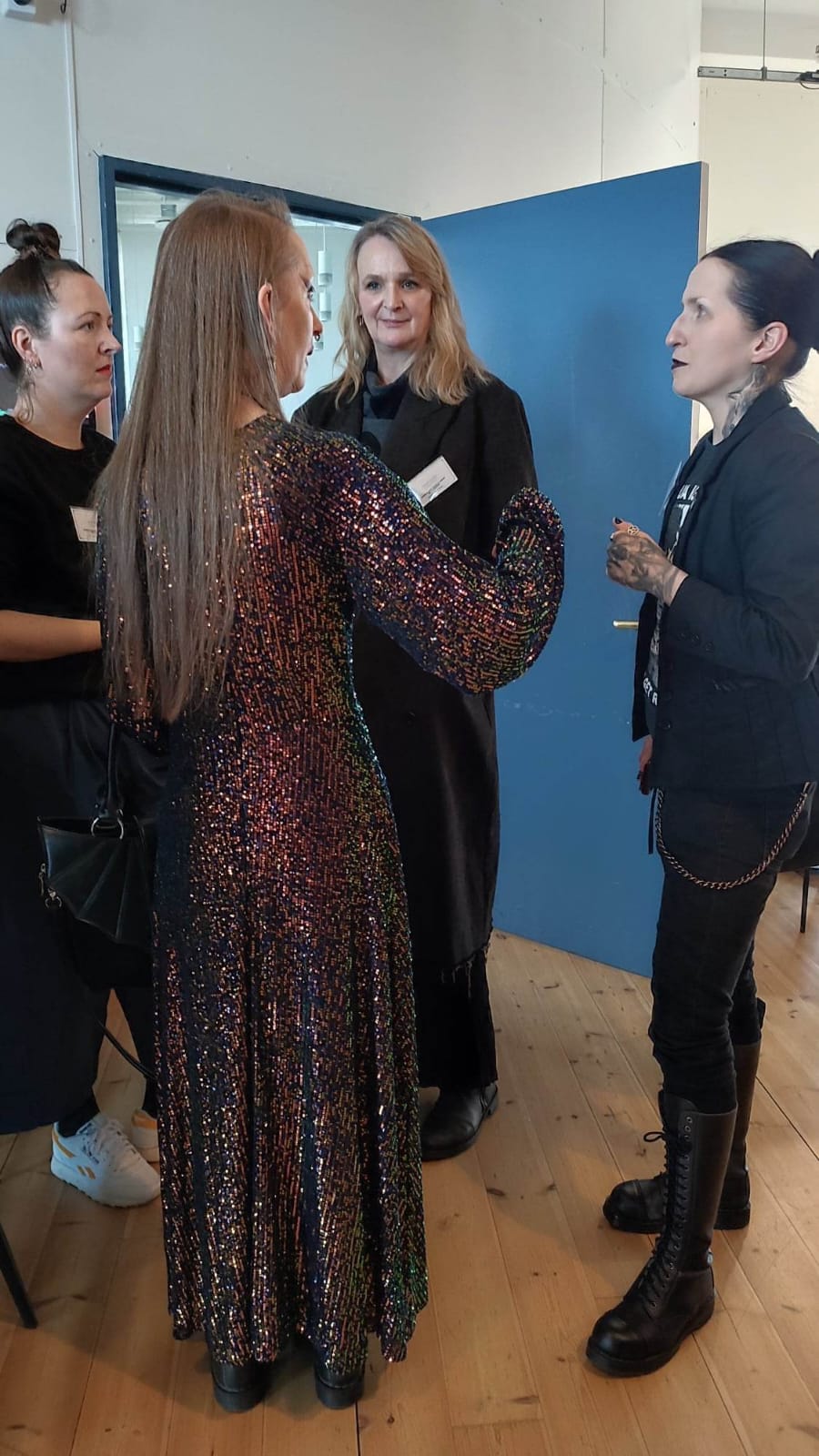
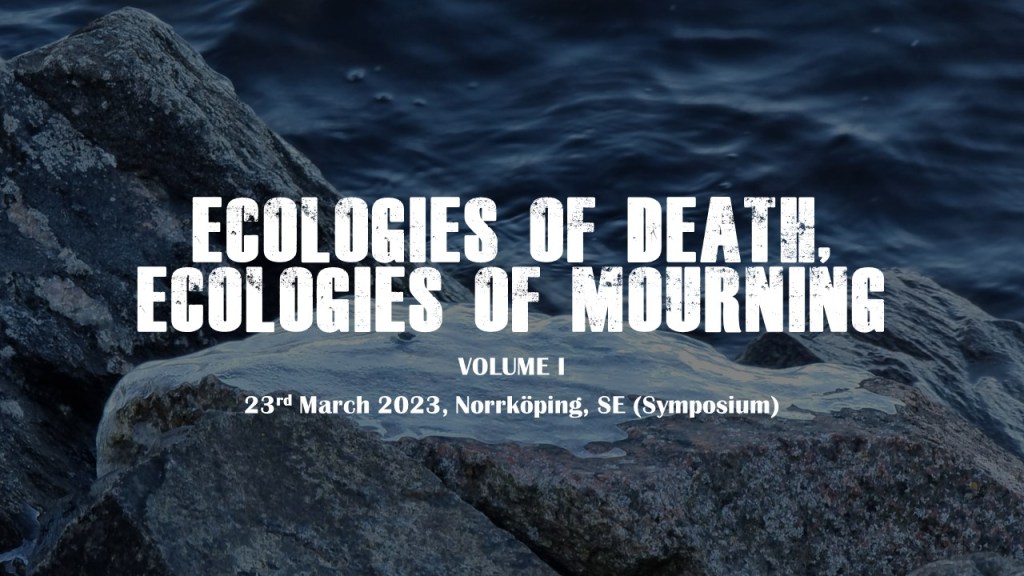
On 23rd March 2023, seven speakers and almost forty members of the audience have gathered at the Museum of Work in Norrköping for “Ecologies of Death, Ecologies of Mourning. Vol. I: An International Symposium. The event was the first in the series of activities focused on critical and creative approaches to grief and mourning in a more-than-human context of the planetary environmental disruption and ecological crises.

The symposium was organised by The Eco- and Bioart Lab, in collaboration with Queer Death Studies Network.

Furthermore, the event was combined with the official launch of the four-year research project Ecological Grief, Crisis Imaginaries and Resilience in Nordic Lights (2022-26), led by Dr Marietta Radomska and generously funded by FORMAS: a Swedish Research Council for Sustainable Development.

Here we would like to bring some memories from the event – check out a short video recap – filmed and produced by Per Wistbo Nibell (Linköping University):

To learn more about the programme – see BELOW.

Finally, we also have a little slideshow of photos from this thought-provoking and truly inspiring event. See below.

Invitation: Tema G Higher Seminar with Prof. Patricia MacCormack on “Occult Ahuman Pedagogy: Death to the Anthropocene by Witchcraft”, 29th March

During the second half of March 2023, The Eco- and Bioart Lab, Queer Death Studies Network and Tema G (the unit of Gender Studies) at Linköping University (LiU) have a pleasure to host our guest and visiting researcher Prof. Patricia MacCormack (Anglia Ruskin University, UK).

We are thrilled to hold several local, hybrid and online events, where you can tune in and engage with the work of Prof. MacCormack. One of these events is the Tema Genus Higher Seminar taking place on 29th March 2023 at 13:15-15:00 CEST.

Pleas, see details below!

Tema Genus Higher Seminar on

“Occult Ahuman Pedagogy: Death to the Anthropocene by Witchcraft”

Speaker: Prof. Patricia MacCormack (Anglia Ruskin University, UK)

Where: Faros, Tema huset, Campus Valla, Linköping University & on Zoom

When: 29th March 2023, 13:15 – 15:00 CEST

BIO:

Patricia MacCormack is Professor of Continental Philosophy at Anglia Ruskin University Cambridge. She has published extensively on philosophy, feminism, queer and monster theory, animal abolitionist activism, ethics, art and horror cinema. She is the author of Cinesexuality (Routledge 2008) and Posthuman Ethics (Routledge 2012) and the editor of The Animal Catalyst (Bloomsbury 2014), Deleuze and the Animal (EUP 2017), Deleuze and the Schizoanalysis of Cinema (Continuum 2008) and Ecosophical Aesthetics (Bloomsbury 2018). Her new book is The Ahuman Manifesto: Activisms for the End of the Anthropocene. She is currently a Leverhulme Research Fellow researching death activism.

The seminar is organised in collaboration with The Eco- and Bioart Lab,

For those of you who are not able to join us on location, we have great news: do tag along via zoom! You may register here: http://bit.ly/3ZRCurg

Ecologies of Death, Ecologies of Mourning vol. II: A Roundtable. 30th March 2023 on Zoom

In case you cannot make it for our symposium on 23rd March in Norrköping, or if you are still thirsty and wish to explore the theme further, you are warmly invited to join us – in a bit altered line-up – for this online event:

Welcome to The Posthumanities Hub & The Eco- and Bioart Lab Webinar

“Ecologies of Death, Ecologies of Mourning vol. II: A Roundtable”

30th March 2023, 13:15 – 15:00 CEST

Where: on Zoom

Our starting point for the international symposium “Ecologies of Death, Ecologies of Mourning: vol. I” (taking place on 23rd March 2023 in Norrköping, SE) is the context of planetary environmental disruption, slow and abrupt environmental violence, and the ways in which ecological, more-than-human dimensions of death have traditionally been underplayed in public debates.  During the symposium, we emphasise that what is urgently needed – now more than ever – is the systematic problematisation of the planetary-scale mechanisms of annihilation of the more-than-human worlds in their philosophical, socio-cultural, ethico-political and very material dimensions.

In this follow-up roundtable, or volume II of “Ecologies of Death, Ecologies of Mourning”, the panellists: Prof. Patricia MacCormack (Anglia Ruskin University, UK), Dr Margherita Pevere (independent artist, DE/IT) and Dr Marietta Radomska (Linköping University, SE) will zoom in on the potential, role, (im)possibilities, urgencies and frictions of artistic and philosophical practices and praxes linked to ecologies of death, care, grief and mourning.

The event is curated by Dr Marietta Radomska.

REGISTER: https://bit.ly/3Ll1J1i

Speakers:

Prof. Patricia MacCormack (Anglia Ruskin University, UK)

Dr Margherita Pevere (independent artist, DE/IT)

Dr Marietta Radomska (Linköping University, SE)

BIOGRAPHICAL NOTES:

Patricia MacCormack, PhD, is Professor of Continental Philosophy at Anglia Ruskin University Cambridge. She has published extensively on philosophy, feminism, queer and monster theory, animal abolitionist activism, ethics, art and horror cinema. She is the author of Cinesexuality (Routledge 2008) and Posthuman Ethics (Routledge 2012) and the editor of The Animal Catalyst (Bloomsbury 2014), Deleuze and the Animal (EUP 2017), Deleuze and the Schizoanalysis of Cinema (Continuum 2008) and Ecosophical Aesthetics (Bloomsbury 2018). Her new book is The Ahuman Manifesto: Activisms for the End of the Anthropocene. She is currently a Leverhulme Research Fellow researching death activism.

Dr Margherita Pevere is an artist and researcher working across biological arts and performance with a distinctive visceral signature. Her inquiry hybridizes biotechnology, ecology, queer and death studies to create artworks that trail today’s ecological complexity. Her body of work is a blooming garden crawling with genetically edited bacteria, cells, sex hormones, microbial biofilm, blood, slugs, growing plants and decomposing remains. She is affiliated to the Eco- and Bioart Lab and co-founded the artists’ group Fronte Vacuo. Web: Www.margheritapevere.com and  https://frontevacuo.com  

Marietta Radomska, PhD, is an Assistant Professor of Environmental Humanities at Linköping University; director of The Eco- and Bioart Lab; co-founder of Queer Death Studies Network; member of The Posthumanities Hub; co-editor of the book series ‘Focus on More-than-human Humanities’ at Routledge (with C. Åsberg); and the PI of ‘Ecological Grief, Crisis Imaginaries and Resilience in Nordic Lights’ (2022-26; funded by FORMAS). She works at the intersection of posthumanities, environmental humanities, continental philosophy, queer death studies, visual culture and contemporary art; and has published in Australian Feminist Studies; Somatechnics; Environment and Planning E and Artnodes, among others. Web: www.mariettaradomska.com

Artwork included in the poster: Margherita Pevere, Semina Aeternitatis (2018)

Ecologies of Death, Ecologies of Mourning: Volume I. International Symposium, 23 March 2023 in Norrköping

Ecologies of Death, Ecologies of Mourning: Volume I

International Symposium

23rd March 2023, 13:00 – 18:00

Organised by The Eco- and Bioart Lab, in collaboration with Queer Death Studies Network

Venue: Arbetets Museum (The Museum of Work), Norrköping
Keynote speakers:

Prof. Patricia MacCormack (Anglia Ruskin University, UK)

Prof. Em. Nina Lykke (Linköping University, SE/Aarhus University, DK)

Speakers:

Dr Evelien Geerts (University of Birmingham, UK)

Prof. Christina Fredengren (Uppsala University, SE)

Dr Tara Mehrabi & Dr Wibke Straube (Karlstad University, SE)

Dr Marietta Radomska (Linköping University, SE)

In the Anthropocene, the epoch of climate change and environmental destruction that render certain habitats unliveable and induce socio-economic inequalities and shared ‘more-than-human’ vulnerabilities, death and loss become urgent environmental concerns. As climate scientists indicate, in order to achieve UN Sustainable Development Goals (UN SDGs), a much more radical transformative action is needed from all stakeholders: governments, the private sector, communities and individuals (Höhne et al. 2020).

Simultaneously, planetary environmental disruption, contributing to the mortality of humans and nonhumans, destruction of entire ecosystems, the sixth mass extinction, both abrupt and ‘slow’ violence (Nixon 2011), evoke feelings of anxiety, anger and grief, manifested in popular-scientific and cultural narratives, art, and activism. These feelings are not always openly acknowledged or accepted in society; and the ecological, more-than-human dimensions of death have traditionally been underplayed in public debates. Yet, what we need now – more than ever – is the systematic problematisation of the planetary-scale mechanisms of annihilation of the more-than-human world in their philosophical, socio-cultural, ethico-political and very material dimensions. Only then will it be possible to talk about the issues of responsibility, accountability and care for more-than-human worlds (Radomska & Lykke 2022).

Taking its starting point in critically investigating and challenging conventional normativities, assumptions and expectations surrounding issues of death, dying and mourning in the contemporary world (Radomska, Meharbi & Lykke 2020; https://queerdeathstudies.net/), this interdisciplinary symposium zooms in on more-than-human ecologies of death, dying, grief and mourning across spatial and temporal scales.

The event is combined with the official launch of the four-year research project Ecological Grief, Crisis Imaginaries and Resilience in Nordic Lights (2022-26), led by Dr Marietta Radomska and generously funded by FORMAS: a Swedish Research Council for Sustainable Development.

Programme:

13:00 – 13:15 – Introduction / Launch FORMAS Eco-Grief Project

13:15 – 14:15 – Keynote I: Prof. Patricia MacCormack (Anglia Ruskin University, UK), “The Difficult Joy of Death Activism”

14:15 – 14:45 – Break (fika)

14:45 – 15:15 – Dr Evelien Geerts (University of Birmingham, UK), “The Memorial 22/3’s more-than-human hauntings: Reimaging memory, commemoration & mourning through queer(ing) spacetimematterings”

15:15 – 15:45 – Prof. Christina Fredengren (Uppsala University, SE), “Ancestral ecologies of life, death and regeneration”

15:45 – 16:15 – Dr Tara Mehrabi & Dr Wibke Straube (Karlstad University, SE), “Unsettling Intimacies: On World-Making Practices with the Other in Minoosh Zomorodinia’s Mixed-Media Installation Knots and Ripples

16:15 – 16:45 – Dr Marietta Radomska (Linköping University, SE), “Between Terminal Ecologies and Arts of Eco-Grief: A Queering Reflection”

16:45 – 17:00 – Break

17:00 – 18:00 – Keynote II: Prof. Em. Nina Lykke (Linköping University, SE), “Mourning (with) Diatoms”

REGISTRATION:

The participation in the symposium is free of charge, but we have a limited number of seats. If you wish to take part in the event, please, fill out the form: https://forms.office.com/e/Yb4qXpyVtX

NB! EDIT: the event is now fully booked. In order to be added to the waiting list, please send an email to: ecobioartlab[at]liu.se

NB! In case you have registered and it turns out you can no longer participate, please let us know by sending an email to: ecobioartlab[at]liu.se . In this way we may be able to let in anyone who may be on the waiting list.

Photo/artwork: Marietta Radomska

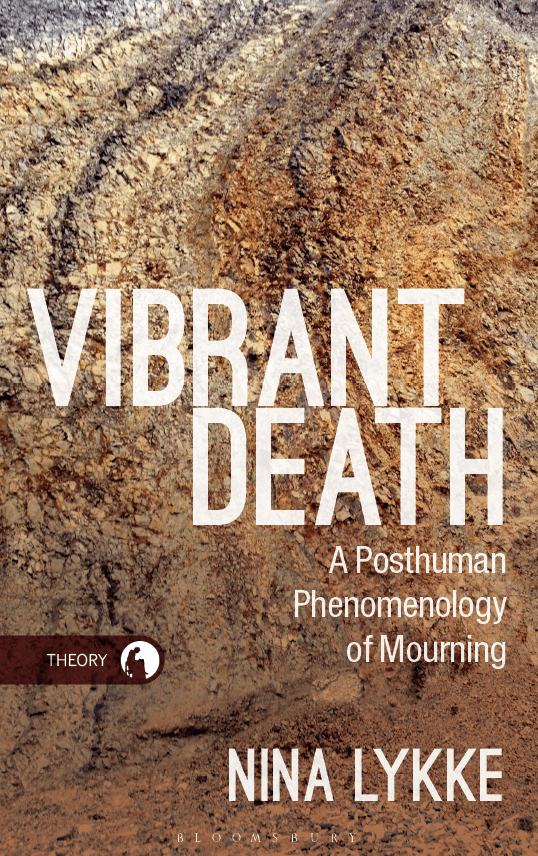
New Book Coming Out Soon!

Nina Lykke:

Vibrant Death. A Posthuman Phenomenology of Mourning.

Bloomsbury Academic, London.

WILL BE AVAILABLE FROM DECEMBER 2021, MORE INFO:

https://www.bloomsbury.com/uk/vibrant-death-9781350149731/


Vibrant Death links philosophy and poetry-based, corpo-affectively grounded knowledge seeking. It offers a radically new materialist theory of death, critically moving the philosophical argument beyond Christian and secular-mechanistic understandings. The book’s ethico-political figuration of vibrant death is shaped through a pluriversal conversation between Deleuzean philosophy, neo-vitalist materialism and the spiritual materialism of decolonial, queerfeminist poet and scholar Gloria Anzaldua. The book’s posthuman de-exceptionalising of human death unfurls together with a collection of poetry, and autobiographical stories. They are analysed through the lens of a posthuman, queerfeminist revision of the method of autophenomenography (phenomenological analysis of autobiographical material).

Nina Lykke explores the speaking position of a mourning, queerfeminine ”I”, who contemplates the relationship with her dead beloved lesbian life partner. She reflects on her enactment of processes of co-becoming with the phenomenal and material traces of the deceased body, and the new assemblages with which it has merged through death’s material metamorphoses: becoming-ashes through cremation, and becoming-mixed-with-algae-sand when the ashes were scattered across a seabed made of fiftyfive million-year-old, fossilised algae. It is argued that the mourning “I”’s intimate bodily empathising (theorised as symphysising) with her deceased, queermasculine beloved life partner facilitates the processes of vitalist-material and spiritual-material co-becoming, and the rethinking of death from a new and different perspective than that of the sovereign, philosophical subject.

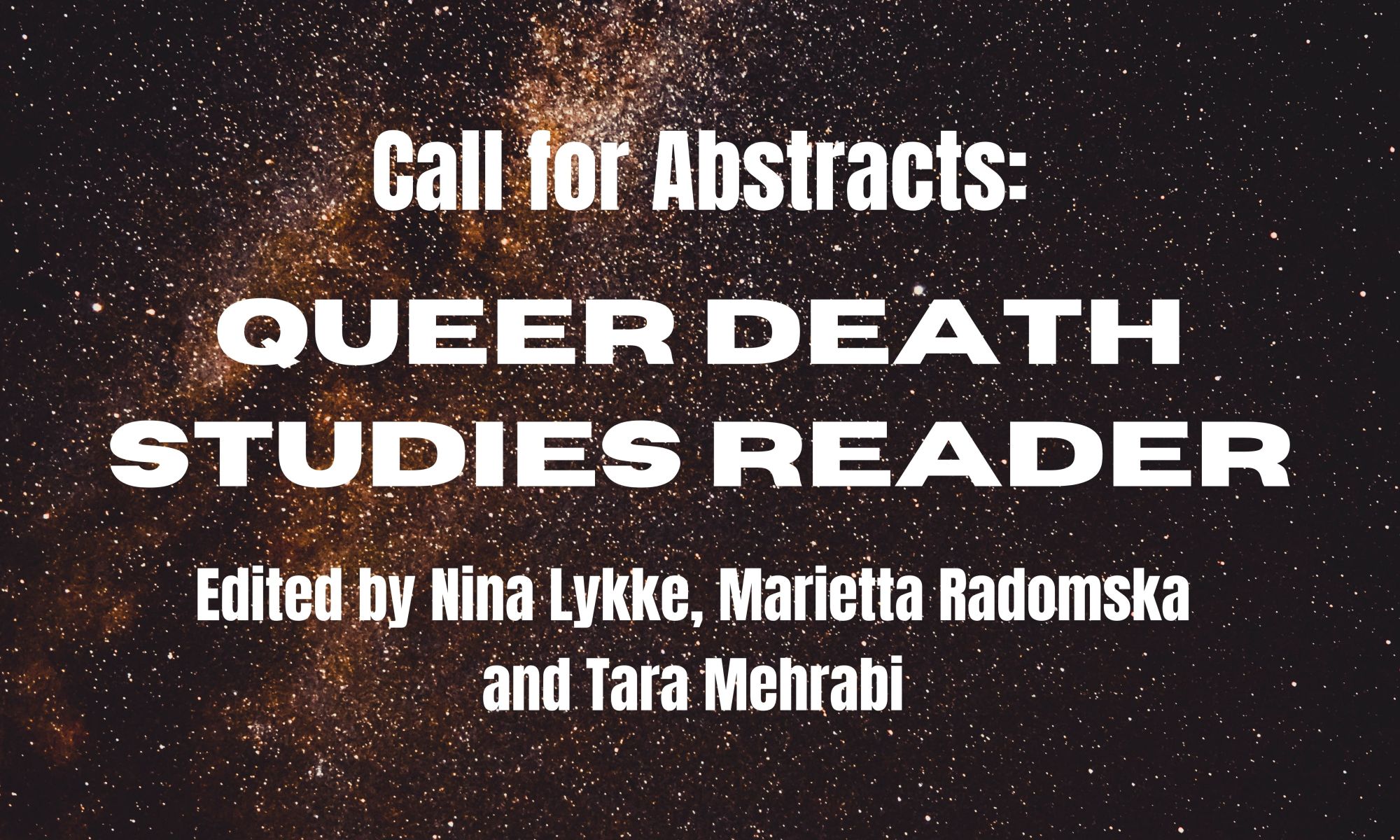
Call for abstracts: Queer Death Studies Reader. Edited by Nina Lykke, Marietta Radomska and Tara Mehrabi

The field of Queer Death Studies

The planned reader will gather a wide range of contributions to the field of Queer Death Studies (QDS). This is an emerging, transdisciplinary field of study which takes research on death, dying, and mourning in new directions, inspired by feminist, posthumanist, decolonial, anti-racist, queer, trans, body- and affect-theoretical scholarship, art and activism (Radomska, Mehrabi and Lykke 2020). What distinguishes QDS from conventional Death Studies such as death sociology or anthropology of death is an overall critical focus on the framing of death and extinction in the contemporary world through Anthropocene necropolitics (Mbembe 2003, Lykke 2019) and necropowers of post/colonialism, racial and extractivist capitalism. Death is approached as an ethico-political issue that is embedded in global power structures. QDS pays attention to systematic, necropolitical productions of death, in dialogue with ethico-political critiques emerging from political movements for social, environmental and planetary justice and change. QDS is also based on critiques of the dichotomous divides, characterising Western modernity, and is marked out through a critical focus on normativities and exclusionary notions of the human, casting the death of those who differ from the normative human subject in terms of gender, racialisation, migration status, class, geopolitical situatedness, able-bodiedness, and species as less grievable or disposable and not counting at all (Butler 2004). In short, QDS aligns itself with critiques of the intra-acting multiplicity of hierarchising divides between appropriate and in/appropriate/d others (Minh-ha 1989), articulated by social, environmental and planetary justice movements.

The Call

With this call, we invite abstracts from researchers, students, artists and activists who see their research and activities as aligned with critiques of the necropowers operating in the contemporary world, and who want to contribute to queering, decolonising and posthumanising death and the onto-epistemololgies and politics conventionally framing death.

Queering, Decolonising and Posthumanising

The verbform, queering, which we use here, encompasses a wide range of meanings. It refers to (1) open-ended deconstructing of normativities and processes of normalisation in various forms, as well as (2) undoing of heteropatriarchy, heteronormativity, binary gender and sexualities governed by reproductive biopowers or, in other words, the normative heterosexual matrix. Queering death is thus on the one hand understood as a critical strange-making, and defamiliarising, which may imply affirmative openings of other horizons than Christian and Cartesian dualist approaches to death, for example a focus on the vibrant entanglement of growing and decomposing (Radomska 2017; Lykke 2022). On the other hand, queering means critically focusing on the ways in which misogyny, trans- and queerphobia lead to social as well as physical death, and how violence and hate crimes towards non-normative individuals seek to render their lives and deaths non-grievable (Puar 2007; Chen 2012; Snorton 2017). Together with this broad spectrum of meanings, we also want to emphasise that queering should be understood in its intersections with decolonising and posthumanising efforts

Decolonising death involves critically dismantling the violent necropowers of colonisation, racial and extractivist capitalism, which for centuries have made death become ”life’s quiet companion” (Lehman 1997) for racialised and indigenous people worldwide, as well as confronting the over-arching racisms which continue to produce (physical, social and cultural) death along racialised lines. Moreover, decolonising death signals a turn towards pluritopic hermeneutics (Tlostanova and Mignolo 2009), i.e. hermeneutics which do not universalise Western modern frameworks, and which reevaluate indigenous philosophies, cosm-ontologies and sensibilities. In terms of life/death thresholds, this implies critically-affirmatively shifting the meanings of death, for example, substituting conceptualisations and imaginaries of death as a final endpoint within a chrononormative linear temporality, and instead opting for understandings, situated in geo- and corpo-political frameworks outside of Western modernity (e.g. Smith 1999; Anzaldua 2015).

Posthumanising death refers to the systematic problematisation of the planetary-scale mechanisms of annihilation of the more-than-human world in their ontological, epistemological and ethico-political dimensions. It involves critical analyses of the human/nonhuman divide and power differentials that have allowed for the reduction of the nonhuman to mere resource and instrument for human endeavours. Furthermore, the posthumanising move entails unpacking philosophical and cultural meanings of extinction and the ways in which it fundamentally disrupts life processes in relation to time, death and generations (e.g. Rose 2012); it draws attention to environmental violence, environmental grief, as well as nonhuman death manufactured en masse through anthropocentric habits of consumption and mechanisms of extractivism.

Consequently, posthumanising death takes seriously the issues of responsibility, accountability and care for/in dying more-than-human worlds, while remaining grounded in radical critiques of human exceptionalism, and affirmative embrace of alternatives (eg. Braidotti 2013; Haraway 2016; MacCormack 2020).

Formats and deadlines:

We call for abstracts of approximately 300 words, to be accompanied by a bio-note of approximately 200 words, as well as by a title of the proposed chapter and an indication of how the chapter relates to the below main themes to be covered in the reader.

Please, send your abstract etc to ninly[at]fastmail.fm , cc: <marietta.radomska[at]liu.se> and <tara.mehrabi[at]kau.se>

Abstract DEADLINE: 1st NOVEMBER, 2021

We will respond to your abstract by MID-JANUARY 2022, and foresee submissions of FIRST DRAFT CHAPTERS by August 1, 2022.

We plan a reader with around 50 contributions, including a few reprints of classics. Scholarly as well as creative and artistic contributions are welcome! We hope together with contributors to build a reader which will be significant and agenda-setting for the field

Thematic clusters:

*Queering Death: Rethinking life/death ecologies

*Histories of necropowers and Anthropocene necropolitics

*Decolonising death

*Posthumanising death

*Demedicalising death

*Politics and Ethics of Mourning

*Alternative Spiritual, Aesthetic and Arts Activist Approaches to Death and After-life

The International Network for Queer Death Studies

The idea for the reader grew out of the international network for Queer Death Studies, which was founded in 2016, (see https://queerdeathstudies.net/). The network has organised several workshops and an international conference at Karlstad University, Sweden, in 2019.

We have earlier published two special journal issues of Australian Feminist Studies (2020, Vol 35 (104)), and Women, Gender and Research (2019: Issue 3-4).

References

Anzaldua, G. E. (2015), Light in the Dark/Luz en Lo Oscuro: Rewriting Identity, Reality, Spirituality, Durham, NC: Duke University Press.

Braidotti, R. (2013), The Posthuman, Cambridge, UK: Polity Press.

Butler, J. (1990), Gender Trouble. Feminism and the Subversion of Identity, London, New York: Routledge.

Butler, J. (2004), Precarious Life: The Powers of Mourning and Violence, New York, NY: Verso.

Chen, M. Y. (2012), Animacies: Biopolitics, Racial Mattering and Queer Affect, Durham, NC: Duke University Press.

Haraway, Donna (2016), Staying with the Trouble: Making Kin in the Chthulucene, Durham, NC and London: Duke University Press.

Lehman, G. (1997), ‘Life’s Quiet Companion’, in G. Carey and R. Sorenson (eds), The Penguin Book of Death, 223–232, Ringwood: Penguin Australia.

Lykke, N. (2019), ‘Making Live and Letting Die: Cancerous Bodies between Anthropocene Necropolitics and Chthulucene Kinship’, Environmental Humanities, 11 (1): 108–36.

Lykke, N (2022), Vibrant Death. A Posthuman Phenomenology of Mourning. London: Bloomsbury Academic.

MacCormack, Patricia (2020a), The Ahuman Manifesto. Activism for the End of the Anthropocene. London: Bloomsbury Academic.

Mbembe, A. (2003), Necropolitics, Public Culture, 15 (1): 11–40.

Minh-ha, T. T. (1989), Woman, Native, Other: Writing Postcoloniality and Feminism, Bloomington and Indianapolis IN: Indiana University Press.

Puar, J. (2007), Terrorist Assemblages: Homonationalism in Queer Times, Durham: Duke UP-

Radomska, M., T. Mehrabi, and N. Lykke (2020), Queer Death Studies: Death, Dying and Mourning From a Queerfeminist Perspective, Australian Feminist Studies, 35(104): 81-100.

Radomska, M. (2017), Non/living Matter, Bioscientific Imaginaries and Feminist Technoecologies of Bioart, Australian Feminist Studies, 32 (94): 377-394.

Rose, D. B. (2012), Multispecies knots of ethical time, Environmental Philosophy, 9(1): 127–140.

Shildrick, M (2020) Queering the Social Imaginaries of the Dead, Australian Feminist Studies, 35(104): 170-185.

Smith, L.T. 1999. Decolonizing Methodologies. Research and Indigenous Peoples. London and New York: Zed books.

Snorton, C.R (2017), Black on Both Sides: A Racial History of Trans Identity. Minneapolis: University of Minnesota Press.

Tlostanova, M. and W. Mignolo (2009), On Pluritopic Hermeneutics, Trans-Modern Thinking, and Decolonial Philosophy, Encounters, 1 (1): 11–27.