The 2024 edition of the summer school is coordinated by Dr Ida Hansen (Utrecht University) and Prof. Em. Nina Lykke (Linköping University).
Here is a brief description taken from the organisers’ website:
“Embedded in the emerging field of Queer Death Studies, this year’s NOISE summer school focuses on the topics of loss and grief by bringing perspectives from the fields of queer feminist, posthuman and eco-critical, anti-racist and post- and decolonial studies to bear on contemporary questions, practices and politics of life and death.
The interdisciplinary field of Queer Death Studies has, in recent years, taken shape as critical interventions in and reconfigurations of the ontologies, epistemologies and ethics that limit the conventional study of death and dying to the anthropocentric, racist, sexed/gendered and otherwise normatively figured human subject and its similarly imagined relations, with little attention paid to the impacts of contemporary bio- and necropolitics (Radomska, Mehrabi and Lykke 2020). Simultaneously, the topic of grief has received heightened attention with its recent realization as psychiatric diagnosis (i.e., the entries of “Prolonged Grief Disorder” in the DSM-5-TR and the ICD-11). Across expert discourse and popular-societal debate, however, resides a tendency to constrain engagement with experiences of loss to the question of whether to perceive of grief as pathology, rather than asking what else this phenomenon might have to tell us about life and death. […]”
In case you cannot make it for our symposium on 23rd March in Norrköping, or if you are still thirsty and wish to explore the theme further, you are warmly invited to join us – in a bit altered line-up – for this online event:
Welcome to The Posthumanities Hub & The Eco- and Bioart Lab Webinar
“Ecologies of Death, Ecologies of Mourning vol. II: A Roundtable”
30th March 2023, 13:15 – 15:00 CEST
Where: on Zoom
Our starting point for the international symposium “Ecologies of Death, Ecologies of Mourning: vol. I” (taking place on 23rd March 2023 in Norrköping, SE) is the context of planetary environmental disruption, slow and abrupt environmental violence, and the ways in which ecological, more-than-human dimensions of death have traditionally been underplayed in public debates. During the symposium, we emphasise that what is urgently needed – now more than ever – is the systematic problematisation of the planetary-scale mechanisms of annihilation of the more-than-human worlds in their philosophical, socio-cultural, ethico-political and very material dimensions.
In this follow-up roundtable, or volume II of “Ecologies of Death, Ecologies of Mourning”, the panellists: Prof. Patricia MacCormack (Anglia Ruskin University, UK), Dr Margherita Pevere (independent artist, DE/IT) and Dr Marietta Radomska (Linköping University, SE) will zoom in on the potential, role, (im)possibilities, urgencies and frictions of artistic and philosophical practices and praxes linked to ecologies of death, care, grief and mourning.
Prof. Patricia MacCormack (Anglia Ruskin University, UK)
Dr Margherita Pevere (independent artist, DE/IT)
Dr Marietta Radomska (Linköping University, SE)
BIOGRAPHICAL NOTES:
Patricia MacCormack, PhD, is Professor of Continental Philosophy at Anglia Ruskin University Cambridge. She has published extensively on philosophy, feminism, queer and monster theory, animal abolitionist activism, ethics, art and horror cinema. She is the author of Cinesexuality (Routledge 2008) and Posthuman Ethics (Routledge 2012) and the editor of The Animal Catalyst (Bloomsbury 2014), Deleuze and the Animal (EUP 2017), Deleuze and the Schizoanalysis of Cinema (Continuum 2008) and Ecosophical Aesthetics (Bloomsbury 2018). Her new book is The Ahuman Manifesto: Activisms for the End of the Anthropocene. She is currently a Leverhulme Research Fellow researching death activism.
Dr Margherita Pevere is an artist and researcher working across biological arts and performance with a distinctive visceral signature. Her inquiry hybridizes biotechnology, ecology, queer and death studies to create artworks that trail today’s ecological complexity. Her body of work is a blooming garden crawling with genetically edited bacteria, cells, sex hormones, microbial biofilm, blood, slugs, growing plants and decomposing remains. She is affiliated to the Eco- and Bioart Lab and co-founded the artists’ group Fronte Vacuo. Web: Www.margheritapevere.com and https://frontevacuo.com
Marietta Radomska, PhD, is an Assistant Professor of Environmental Humanities at Linköping University; director of The Eco- and Bioart Lab; co-founder of Queer Death Studies Network; member of The Posthumanities Hub; co-editor of the book series ‘Focus on More-than-human Humanities’ at Routledge (with C. Åsberg); and the PI of ‘Ecological Grief, Crisis Imaginaries and Resilience in Nordic Lights’ (2022-26; funded by FORMAS). She works at the intersection of posthumanities, environmental humanities, continental philosophy, queer death studies, visual culture and contemporary art; and has published in Australian Feminist Studies; Somatechnics; Environment and Planning E and Artnodes, among others. Web: www.mariettaradomska.com
Artwork included in the poster: Margherita Pevere, Semina Aeternitatis (2018)
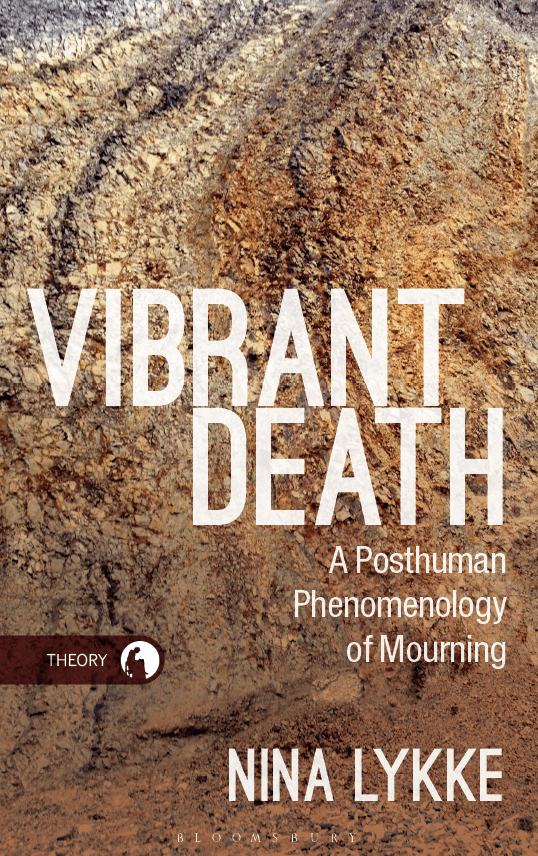
Vibrant Death links philosophy and poetry-based, corpo-affectively grounded knowledge seeking. It offers a radically new materialist theory of death, critically moving the philosophical argument beyond Christian and secular-mechanistic understandings. The book’s ethico-political figuration of vibrant death is shaped through a pluriversal conversation between Deleuzean philosophy, neo-vitalist materialism and the spiritual materialism of decolonial, queerfeminist poet and scholar Gloria Anzaldua. The book’s posthuman de-exceptionalising of human death unfurls together with a collection of poetry, and autobiographical stories. They are analysed through the lens of a posthuman, queerfeminist revision of the method of autophenomenography (phenomenological analysis of autobiographical material).
Nina Lykke explores the speaking position of a mourning, queerfeminine ”I”, who contemplates the relationship with her dead beloved lesbian life partner. She reflects on her enactment of processes of co-becoming with the phenomenal and material traces of the deceased body, and the new assemblages with which it has merged through death’s material metamorphoses: becoming-ashes through cremation, and becoming-mixed-with-algae-sand when the ashes were scattered across a seabed made of fiftyfive million-year-old, fossilised algae. It is argued that the mourning “I”’s intimate bodily empathising (theorised as symphysising) with her deceased, queermasculine beloved life partner facilitates the processes of vitalist-material and spiritual-material co-becoming, and the rethinking of death from a new and different perspective than that of the sovereign, philosophical subject.
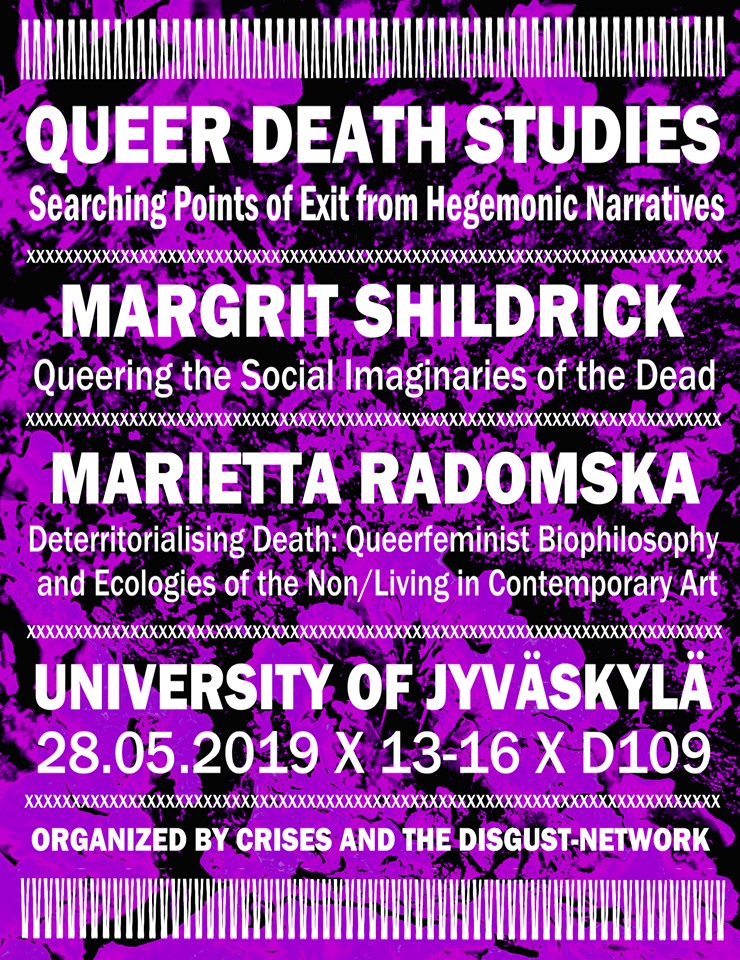
Welcome to the seminar “Queer Death Studies: Searching Points of Exit from Hegemonic Narratives” with Professor Margrit Schildrick and Dr. Marietta Radomska.
The seminar, held on the 28 of May (D 109) at 13-16, is organised by the Disgust Network in collaboration with Crises Redefined: Historical Continuity and Societal Change. Further details below.
Seminar “Queer Death Studies: Searching Points of Exit from Hegemonic Narratives”
Queer Death Studies Network, established in 2016, constitutes a space for researchers, students, artists, activists, and other practitioners who critically and (self) reflexively investigate and challenge conventional normativities, assumptions, expectations, and regimes of truths that are brought to life and made evident by death, dying, and mourning.
The conventional engagements with the questions of death, dying and mourning are insufficient and reductive: they are often governed by the normative notions of the subject; interhuman and human/nonhuman bonds; family relations and communities; rituals; and finally, experiences of grief, mourning, and bereavement. Moreover, these engagements are often embedded in constraining beliefs in life/death divides, constructed along the lines of conventional religious and/or scientific mind/body dualisms.
Against this background, Queer Death Studies serves as a site for ‘queering’ traditional ways of approaching death both as a subject of study and philosophical reflection, and as a phenomenon to articulate in artistic work or practices of mourning. Here, the notion of ‘queer’ conveys many meanings. It refers to researching and narrating death, dying and mourning in the context of queer bonds and communities, where the subjects involved/studied/interviewed and the relations they are involved in are recognised as ‘queer’. Simultaneously, the term ‘queer’ can also function as an adverb and a verb, referring thus to the processes of going beyond and unsettling (subverting, exceeding) binaries and given norms, normativities, and constraining conventions. In other words, ‘queer’ becomes both a process and a methodology that is applicable and exceeds the focus on gender and sexuality as its exclusive concerns.
This seminar brings together papers by two scholars whose work is embedded in the field of Queer Death Studies and who’s been active in the formation and development of QDSN.
Queering the Social Imaginaries of the Dead,
Margrit Shildrick
Abstract:
I offer a philosophical examination and queering of the social imaginaries of the dead – with specific reference to the recent public disclosures about death in Ireland’s Mother and Baby Homes – by looking at the issue of spectrality through the work of Derrida and others. What does it mean to respond to the dead, who, though temporarily forgotten, return to haunt us not as remembered human beings but as remnants or remainders? The normative distinctions between past and present; past, present and future; between living and non-living; absence and presence; and self and other are all made indistinct when displaced by a non-linear temporality. What differential is in play with respect to those who are grievable (as Butler has it) and the others who constitute bare life (Agamben)? Following the re/discovery of those dead lost to public discourse, the strategy of memorialisation seems inadequate. I will outline instead an alternative hauntological ethics, as suggested by Derrida, and ask if there are queer social imaginaries that allow us to live well with the dead not because we give them respect, but because death itself has been rethought? I will close with some speculations arising from Deleuze’s understanding of vitalism and Braidotti’s optimistic claim that ‘death frees us into life’.
Bio:
Margrit Shildrick, PhD is Guest Professor of Gender and Knowledge Production at Stockholm University. Her research covers postmodern feminist and cultural theory, bioethics, critical disability studies and body theory. Books include Leaky Bodies and Boundaries (1997), Embodying the Monster (2002) and Dangerous Discourses of Disability, Sexuality and Subjectivity (2009), as well as several edited collections and many journal articles. Most recently, she has been addressing the socio-political and embodied conjunction of microchimerism, immunology, corporeal anomaly and death.
Deterritorialising Death: Queerfeminist Biophilosophy and Ecologies of the Non/Living in Contemporary Art,
Marietta Radomska
Abstract:
In the contemporary context of environmental crises and the degradation of food and water resources, certain habitats become unliveable, leading to the death of individuals, populations and species extinction. Whilst bioscience emphasises interdependency and relationality as crucial characteristics of life shared by all organisms, Western cultural imaginaries tend to draw a thick dividing line between humans and nonhumans, particularly evident in the context of death. On the one hand, death appears as a process common to all forms of life; on the other, as an event that distinguishes human from other organisms (e.g. Heidegger 2010 (1953)).
Against this background, this paper explores how contemporary art – in particular, the series of works The Absence of Alice (2008-2011) by Australian new-media and bioartist Svenja Kratz – challenges the normative and human-exceptionalist concept of death. By employing queerfeminist biophilosophy (Thacker 2008; Radomska 2016) as a strategy that focuses on relations, processes and transformations instead of ‘essences’, the paper examines the ways Kratz’s works – read through feminist-materialist theorising – deterritorialise (Deleuze & Guattari 2004) the conventional concept of death. In this way, it hopes to attend to the intimacies between materialities of a human and nonhuman kind that form part of the processes of death and dying, and what follows, to reframe ethico-ontology of death as material and processual ecologies of the non/living.
Bio:
Marietta Radomska, PhD, is a Postdoc at the Department of Thematic Studies (Gender Studies), Linköping University, SE, and a Visiting Postdoctoral Researcher at the Department of Cultures (Art History), University of Helsinki, FI. She is the co-director of The Posthumanities Hub; founder of The Eco- and Bioart Research Network, co-founder of International Network for ECOcritical and DECOlonial Studies and a founding member of Queer Death Studies Network. Radomska is a philosopher and transdisciplinary gender studies and posthumanities scholar. Her current research project focuses on ecologies of death in the context of contemporary art. She is the author of the monograph Uncontainable Life: A Biophilosophy of Bioart (2016), and has published in Australian Feminist Studies, Somatechnics, and Angelaki, among others.
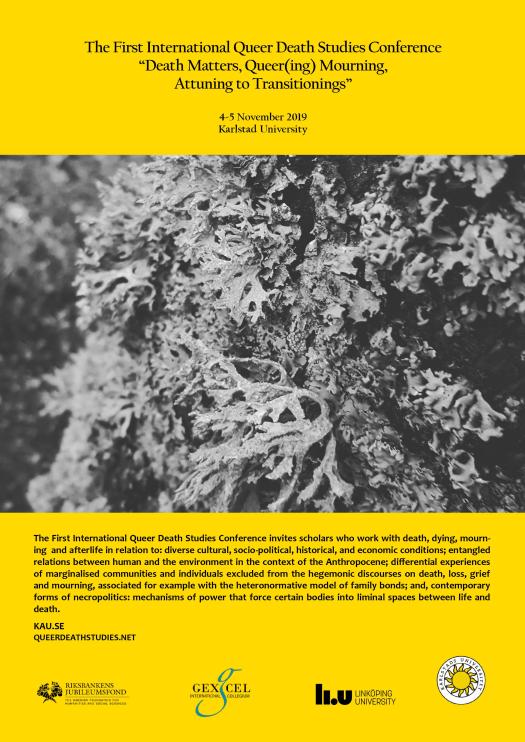
4-5 November 2019 – The First International Queer Death Studies Conference “Death Matters, Queer(ing) Mourning, Attuning to Transitionings”, at Karlstad University, Sweden. MORE INFO COMING SOON!
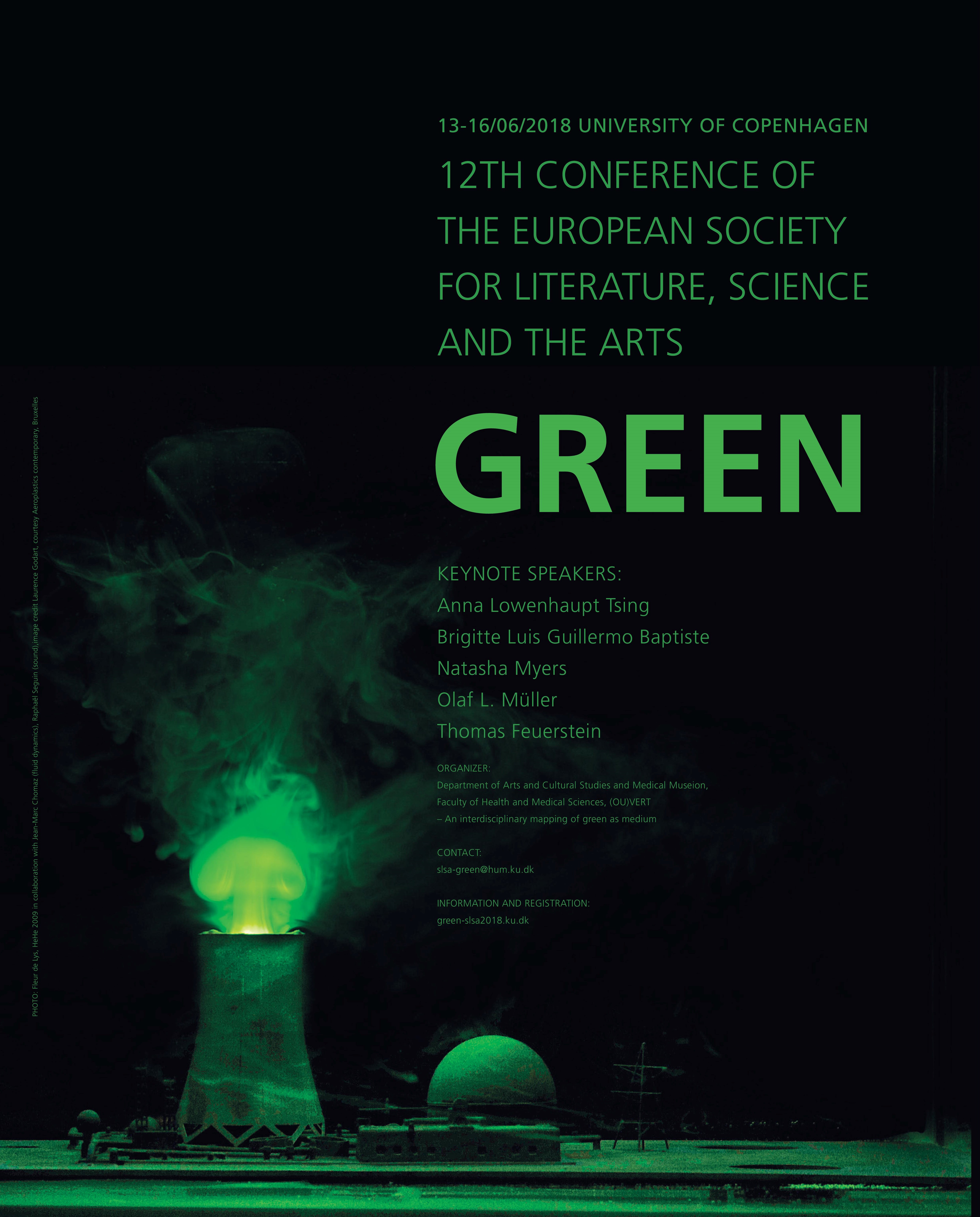
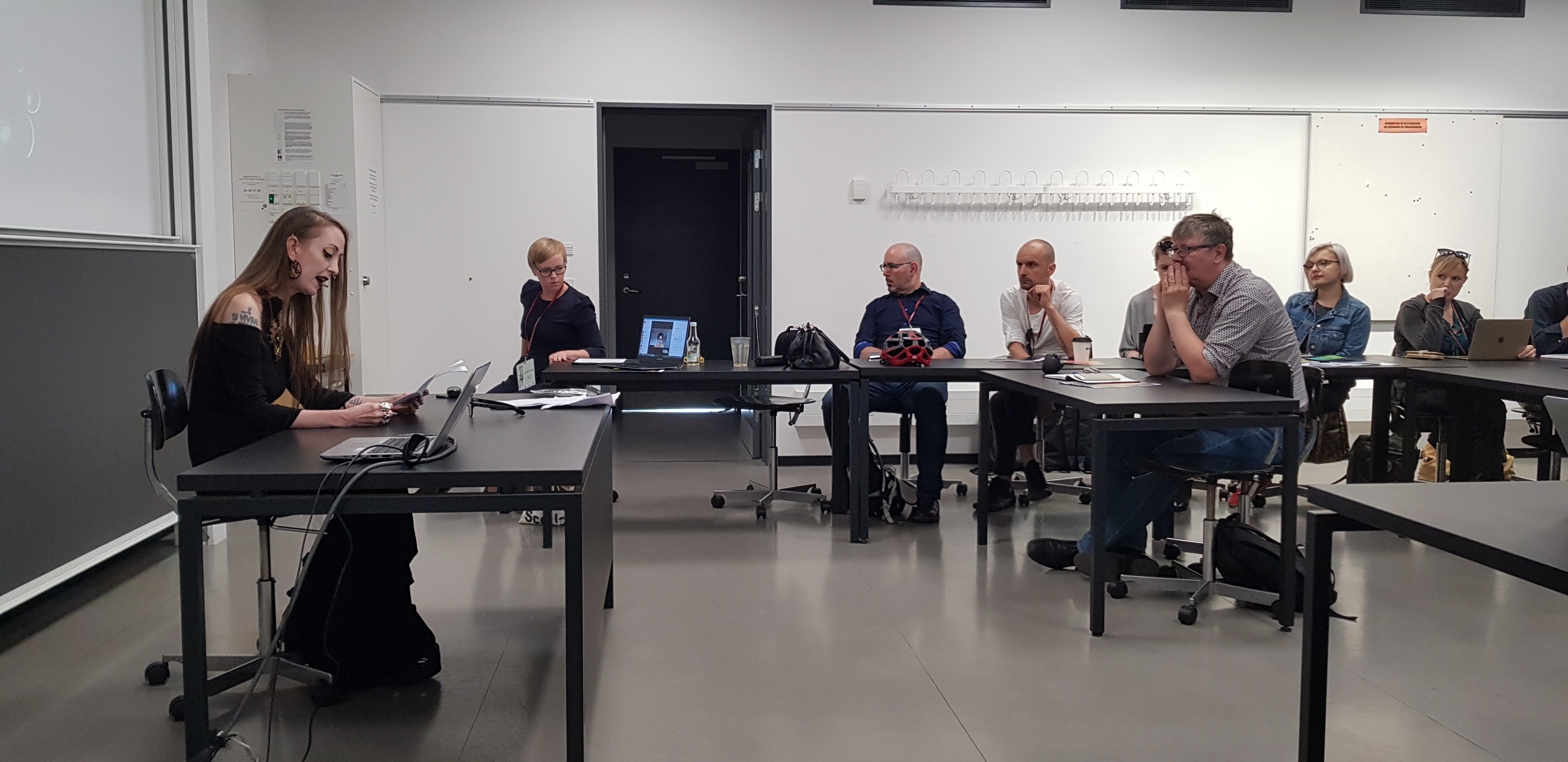
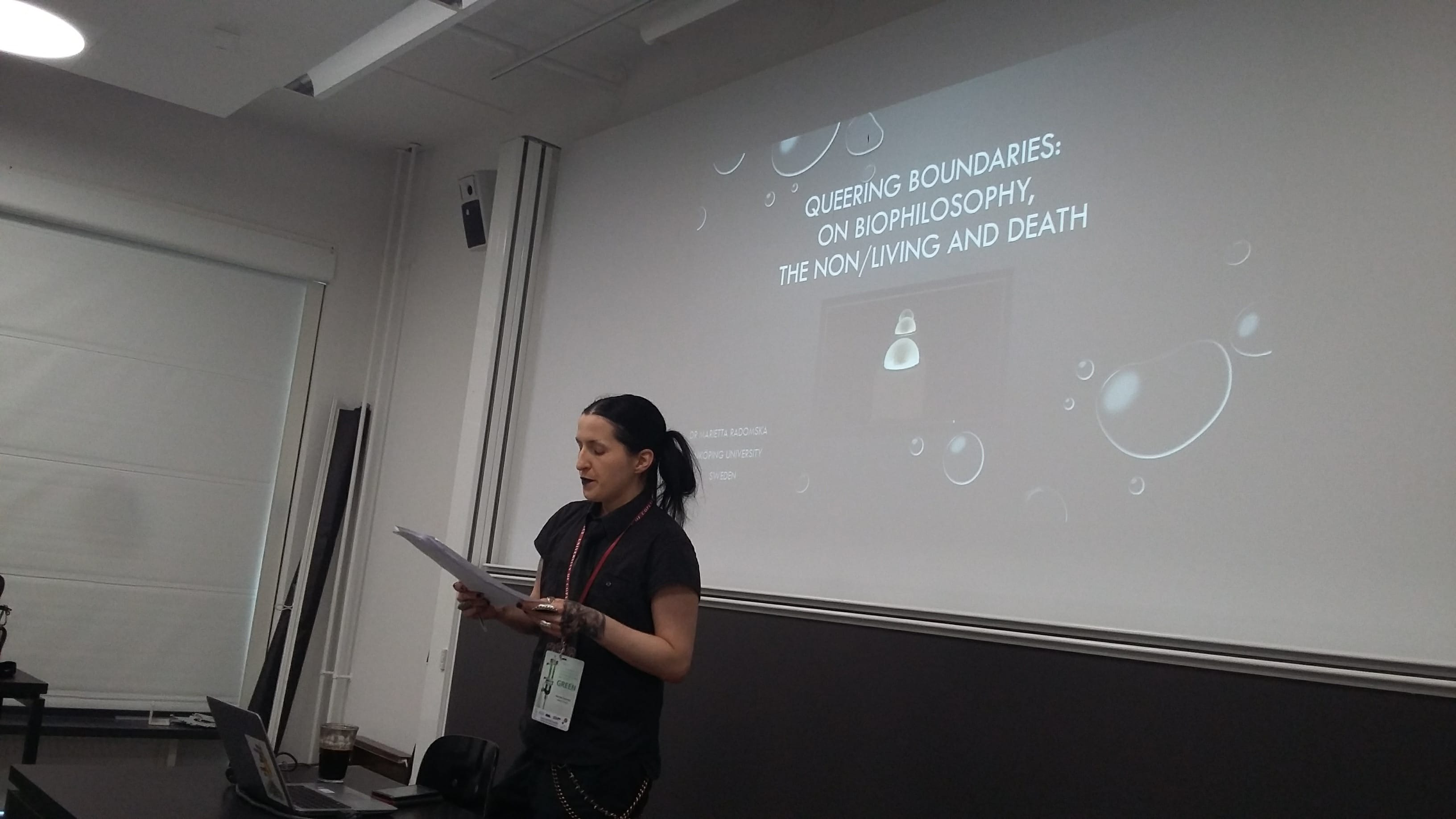
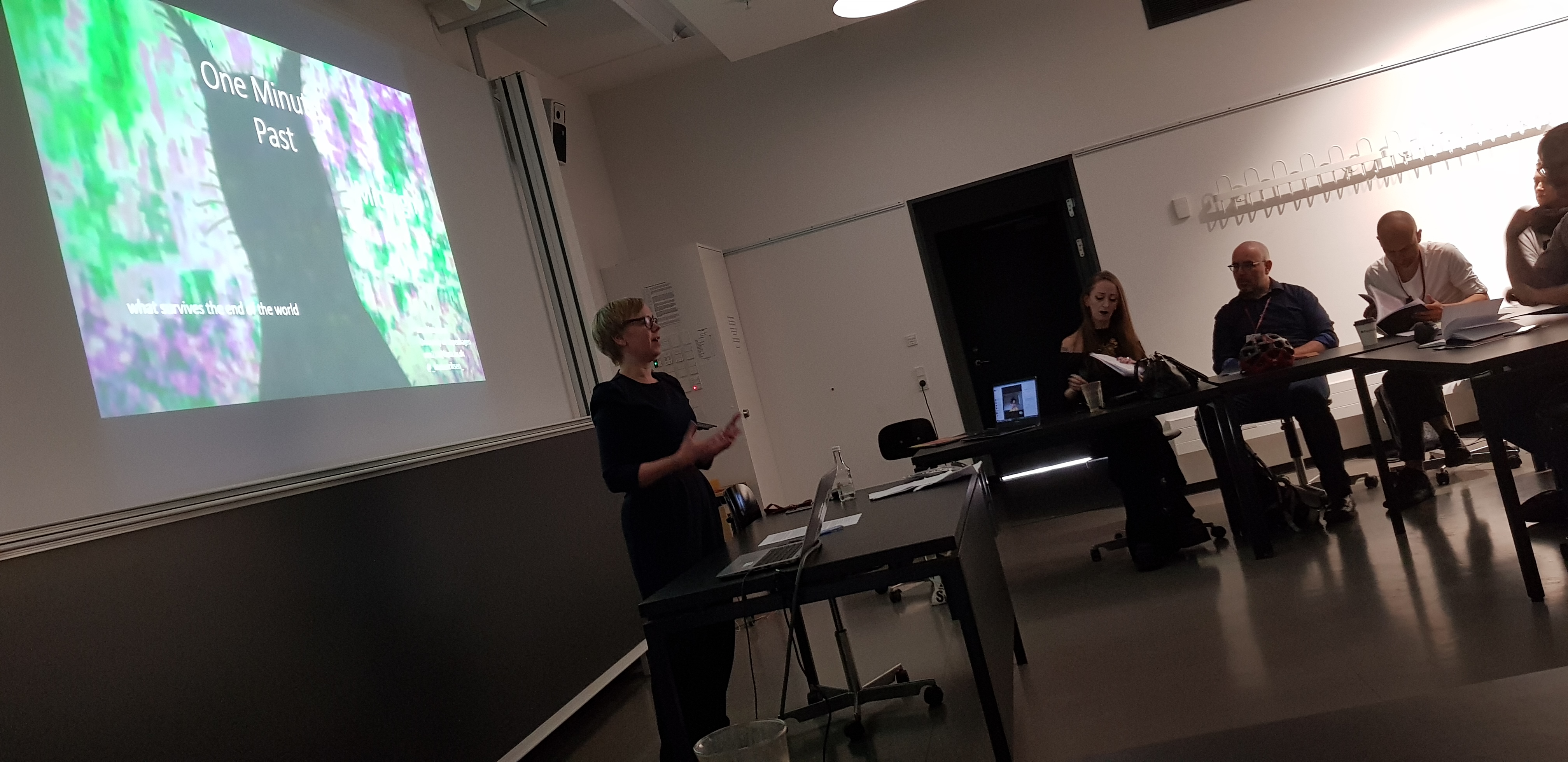
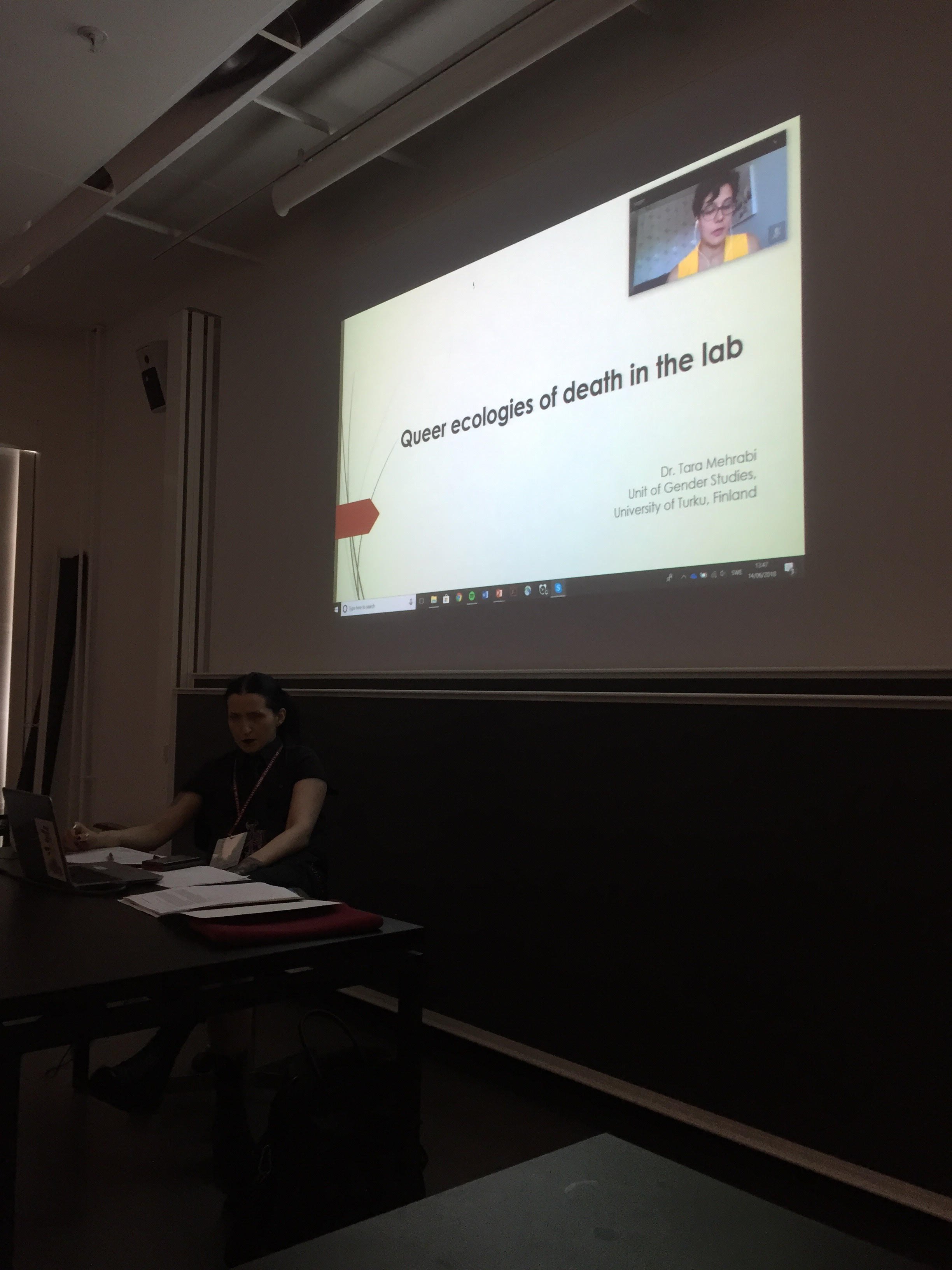
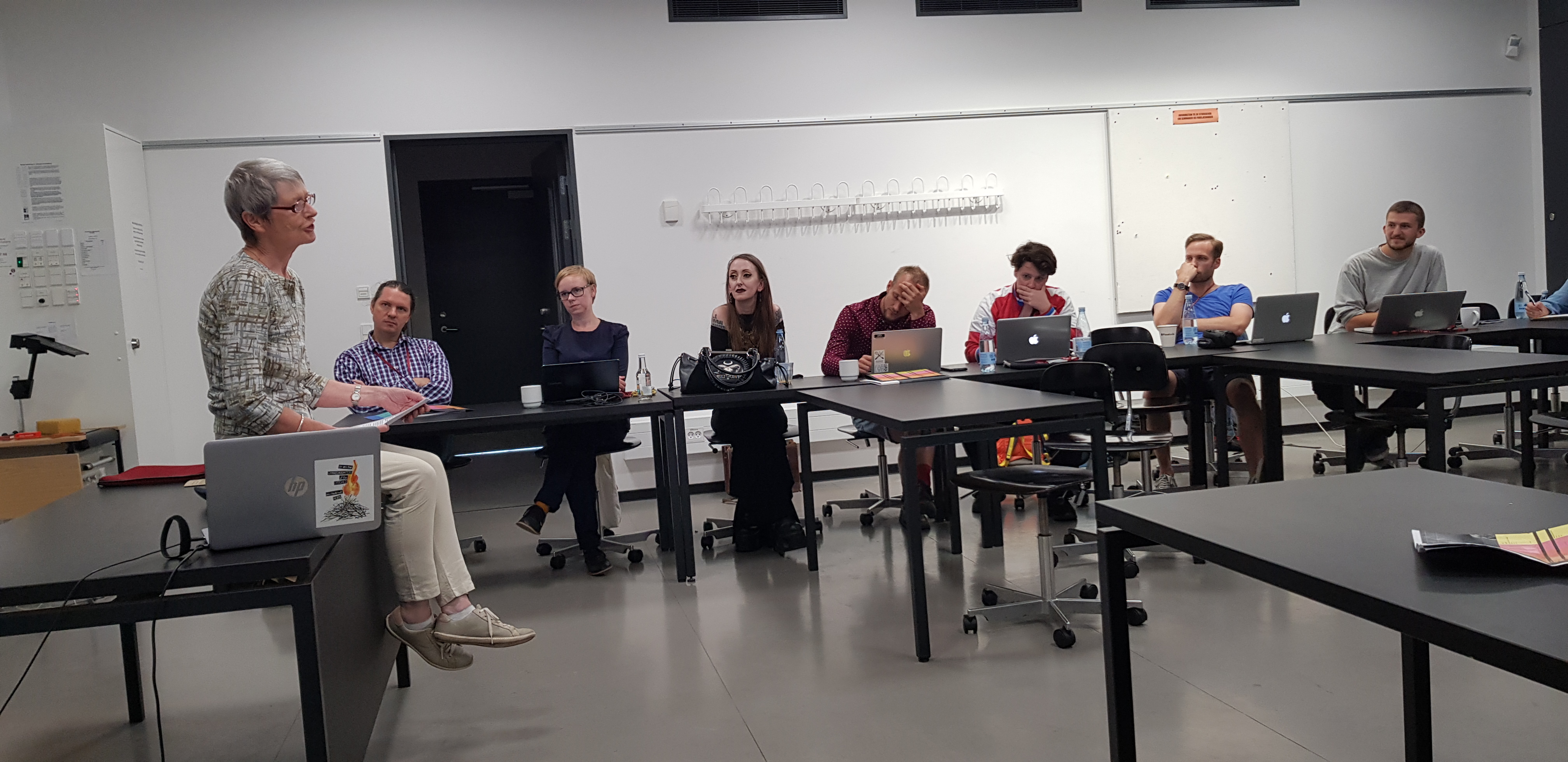
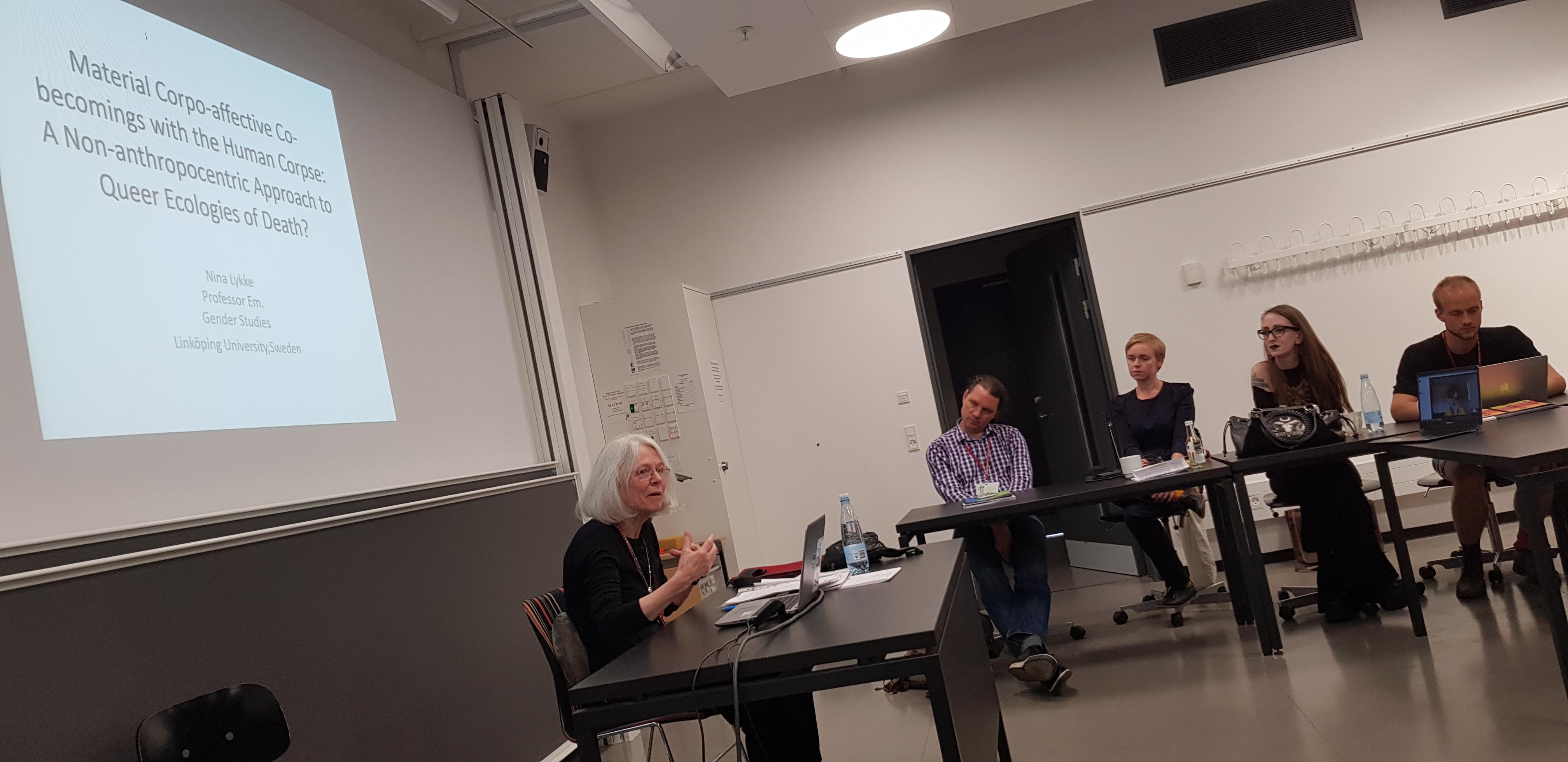
On 14th July some of the QDS Network researchers had a pleasure to present their work in the two-session panel ‘Queering Ecologies of Death’, proposed by Prof. Patricia MacCormack (Anglia Ruskin University, UK) and Dr. Marietta Radomska (Linköping University, SE), at the SLSAeu GREEN conference that took place on 13-16 June 2018 in Copenhagen, Denmark.
Below you may find the summary of the panel which consisted of the speakers: Dr. Marietta Radomska, Prof. Patricia MacCormack, Dr. Line Henriksen (University of Copenhagen, DK), Dr. Tara Mehrabi (University of Turku, FI), Prof. Margrit Shildrick (Stockholm University, SE) and Prof. Nina Lykke (Linköping University, SE).
‘Green’ as a concept has become a shorthand for ‘ecology’, understood as that which refers to ‘home’ or ‘environment’ with all their constituting relationalities. It not only evokes a reflection on or concern with human and nonhuman entities and their milieus, but also implies a set of discourses (public, political, scientific, philosophical) that focus on the climate change and contemporary ecological crises. The latter, more often than not, entail the degradation and diminution of food and water resources, which make certain habitats unlivable.
Along with ‘climate migration’, these processes lead to the death of individual organisms, populations and species extinction, prompting us to reconsider our ways of understanding and relating to death, dying, extinction and annihilation.
While bioscience and biotechnologies underline and expose interdependency, commonality and relationality as key characteristics of life shared by all organisms, Western thought and cultural imaginaries tend to draw a thick dividing line between human and nonhuman animals and other organisms, notably visible in the context of death. The interdisciplinary field of Death Studies (in its conventional form) gives precedence to the death of human individuals as its main research subject, examined primarily through psychological, anthropological and sociological lens. Western philosophies approach death in a double way: as a process common to all organisms and an event that distinguishes the human from other creatures (e.g. Heidegger [1953] 2010; Calarco 2008).
Yet, in the context of discussions on the so-called Anthropocene – a distinct geological epoch we live in, generated by ‘human activities on earth and atmosphere, and at all, including global, scales’ (Crutzen & Stoermer 2000, 17) – it becomes evident that the stories of species extinction, animal death and annihilation of nonhuman life, broadly speaking, are deeply entangled with the histories of colonial violence, genocide and oppression/elimination of the non-normative human other.
Environmental science and the humanities examine more-than-human death primarily in the form of species extinction, its narratives and imaginaries. Simultaneously, human death is classified, investigated and valued separately: approached through a cultural, social or biomedical lens, it appears as either ‘the end’ of individual’s existence (in religious discourses taken as a step towards an afterlife), or as something to postpone or eliminate by medical means. However, if we look at the human corpse itself, it is an (always already) non/human assemblage of entities, materialities and processes.
Against this background, what strikes is the lack of sufficient theorising of the messy intimacies between materialities of human and nonhuman kind that constitute the processes of death, dying and annihilation. In other words, our cultural understandings require conceptualisations and narratives attentive to multiplicitous relationalities and entanglements of the living and non-living, and human and nonhuman or, what we call, ‘ecologies of death’.
This transdisciplinary panel brings together several different perspectives, encompassing such fields as philosophy, art, cultural studies, monster studies, science and technology studies, gender studies and disability studies, in order to ask what it means to queer ecologies of death. The speakers will not only concentrate on the processes and materialities of death and dying, and living and non-living in a more-than-human world, but also investigate how such enquiries go beyond, unsettle and subvert given norms, normativities and binaries that govern our approaches to and understandings of death, dying, extinction and annihilation. In particular, the
panelists will focus on the following set of questions:
How can ecosophy (a thought informed by entangled intimacies of the living and non-living beyond green) and bio-philosophy (thinking life in its relation to that which takes it beyond itself) attend to multiplicitous difference and relationality constitutive of death and dying as well as its ontology and ethics?
Queering Ecologies of Death: Part 1
While thinking with and through the contemporary practices of eco- and bioart, Marietta Radomska (Linköping University) will ask how such forms of art explore and enact the
relations between the human and the environment in the context of the annihilation of life on Earth resulting from human activity? How can doing biophilosophy through art contribute to a less anthropocentric, non-normative and different understanding of death? And, in return, what kinds of ethics does it mobilise? Patricia MacCormack (Anglia Ruskin University) will focus on how abolitionism (animal rights at its extreme) can rethink entanglement as grace through a leaving be, while also opening the ecosophical world to freedoms unperceived by anthropocentric apprehension. Furthermore, she will ask how human extinction through a cessation of reproduction or advocation of anti-natalism could further abolition to become
a form of queer death activism that is both vitalistic and caring, creative and jubilant? Line Henriksen (University of Copenhagen) will look at the ways contemporary ecocritical discourses bring forward the questions of disappearance, absence, annihilation, trace and void. More specifically, if ecology is a home/household
(oikos) – she asks – is it haunted? By bringing together hauntology and ecotheory, she will discuss what it means to think spectrality as part of ecological systems, thereby delving
into the transparency of the apparition as much as the traditional ‘green’ of ecology.
Queering Ecologies of Death: Part 2
Drawing on her ethnographic work in a Drosophila Melanogaster laboratory, Tara Mehrabi (University of Turku/Karlstad University) will explore how, in the context of
contemporary bioscience, life (e.g. of animal models) – no longer scientifically ‘valuable’/’useful’ – becomes ‘waste’. How does this particular ecology of death challenge and queer the boundaries of natural/artificial, inside/outside, nature/laboratory,
safe/hazardous and living/non-living beyond green? How does it problematise human exceptionalism and binary logic? Margrit Shildrick (Stockholm University/University of Toronto) will enquire about death (organic/cellular/singular/species) in the context of the research on michrochimerism
beyond the human. She will anchor these questions in the problematics around the ‘greening’ of the gut and eradication therapy.
Finally, Nina Lykke (Linköping University) will concentrate on how human death and the human corpse can be rethought from the perspective of inhuman forces, understood
in an immanence philosophical sense, and redefined against the background of its transcorporeal belonging to a queer planetary kinship of vulnerable more-than-human-bodies. What are the eco-ethical implications of such a redefinition?
Prof. Patricia MacCormack on ‘The Age of Anthropophagus’
Dr. Marietta Radomska on ‘Queering Boundaries: On Biophilosophy, the Non/Living and Death’
Dr. Line Henriksen on ‘One Minute Past: What Survives at the End of the World’
Dr. Tara Mehrabi on ‘Queer Ecologies of Death in the Lab’
Prof. Margrit Shildrick on microbiome, microchimerism and death
Prof. Nina Lykke on ‘Material Corpo-affective Co-becomings with the Human Corpse’
Please, check the full programme – including abstracts and bios – of The Third International Queer Death Studies Workshop Death Matters: Death and Dying in a Queer Context, taking place on 30-31 May 2018 in Linköping, here.
If you would like to attend the event, but haven’t registered yet, please do so by sending an email to: tara.mehrabi[at]liu.se by 23rd May 2018 at the latest.
Call for Papers: Queer Death Studies: Coming to Terms with Death, Dying and Mourning Differently
Special issue
Women, Gender & Research, 2019/2-3
Queer Death Studies (QDS) refers to an emerging transdisciplinary field of research that critically and (self) reflexively investigates and challenges conventional normativities, assumptions, expectations, and regimes of truths that are brought to life and made evident by death, dying, and mourning.
Since its establishment as a research field in the 1970s, Death Studies has drawn attention to the questions of death, dying, and mourning as complex and multifaceted phenomena that require inter- or multi-disciplinary approaches and perspectives. Yet, the engagements with death, dying and mourning, constitutive of conventional Death Studies’ investigations, tend to remain insufficient and reductive. They are often governed by the normative notions of: the subject; bonds between humans, as well as between humans and (their) animals; family relations and communities; rituals; and finally, experiences of grief, mourning, and bereavement. Moreover, these engagements are frequently embedded in constraining beliefs in life/death divides, constructed along the lines of conventional religious and/or scientific mind/body dualisms, characteristic of the Western cultural imaginaries.
Against this background, QDS offers a site for ‘queering’ traditional ways of approaching death both as a subject of study and philosophical reflection, and as a phenomenon to articulate in artistic work or practices of mourning. Here, the notion of ‘queer’ conveys many meanings. It refers to researching and narrating death, dying, and mourning in the context of queer bonds and communities, where the subjects involved/studied/interviewed and the relations they are involved in are recognised as ‘queer’. Simultaneously, the term ‘queer’ can also function as an adverb and a verb, referring thus to the processes of going beyond and unsettling (subverting, exceeding) binaries and given norms, normativities, and constraining conventions. In other words, ‘queer’ becomes both a process and a methodology that is applicable and exceeds the focus on gender and sexuality as its exclusive concerns.
This special issue invites academic as well as artistic contributions that focus on and explore the ways queer theory and queer perspectives can help us rethink death, dying, remains, afterlife, mourning and the life-death dichotomy.
The topics may include, but are not limited to:
– Queer methodologies of researching death, dying and mourning
– Queer practices of mourning and bereavement
– Materiality of death and corpses
– Death/life ecologies
– Necropolitics and borders
– Un/grievable lives and deaths
– Death and biotechnology/biomedicine
– Queering cancer and other life-threatening diseases
– Suicide
– Technologies of life/death
– Queer widowhood
– Decolonialising death
– Illness narratives and death
– Ethico-politics and practices of killability
– Nonhuman death and dying
– Extinction and annihilation
– Death and acts of resistance
– ‘Slow death’
– Queering temporalities of death
– Queer spiritualities
Editors:
Marietta Radomska, postdoc, Linköping University, Sweden
Tara Mehrabi, postdoc, University of Turku, Finland
Nina Lykke, professor emerita, Linköping University, Sweden
Deadline for abstracts (max 300-word + up to 100 word author bio): June 25, 2018 Deadline for articles: December 1, 2018
All contributions must be in English and should be submitted to: redsek@soc.ku.dk



 Queer Death Studies Network